Setting Up a Carpentry and Kitchen Workshop: The Essential Machines and the Order to Buy Them
Opening a kitchen or wardrobe workshop, or upgrading your current one? This guide arranges the machines by production line and shows what to buy first and what to postpone.

In this article
- 1.The stages of kitchen and wardrobe manufacturing
- 2.The essential machines and what each does
- 3.The buying order in stages
- 4.Preparing the workshop before the machines
- 5.Don't buy a machine without after-sales support
- 6.Drilling: the stage many forget
- 7.Arranging the machines in the workshop
- 8.How many workers do you need?
- 9.How to split the budget
- 10.Machines to add as the workshop grows
- 11.Common materials and their effect on the machines
- 12.Quality check before delivery
- 13.FAQ
The kitchen, wardrobe and furniture market in Saudi Arabia is large and growing, and competition in it is on quality and delivery speed. A workshop that relies on manual work struggles with both. The solution is not to buy every machine at once, but to arrange them by production line and workload.
In this guide we walk you through it step by step: the stages of manufacturing, the machine that serves each stage, and the order to buy them in.
The stages of kitchen and wardrobe manufacturing
- Cutting: cutting full panels into parts to size.
- Edge banding: applying edging to the visible edges of the parts.
- Drilling and milling: holes for hinges and joints, and handle openings.
- Assembly and installation: assembling carcasses and fitting doors and drawers.
Each stage has a machine that serves it, and the quality at each stage depends on the one before: inaccurate cutting gives poor edge banding, and poor edge banding gives a weak finished product.
The essential machines and what each does
| Machine | What it does | When you need it |
|---|---|---|
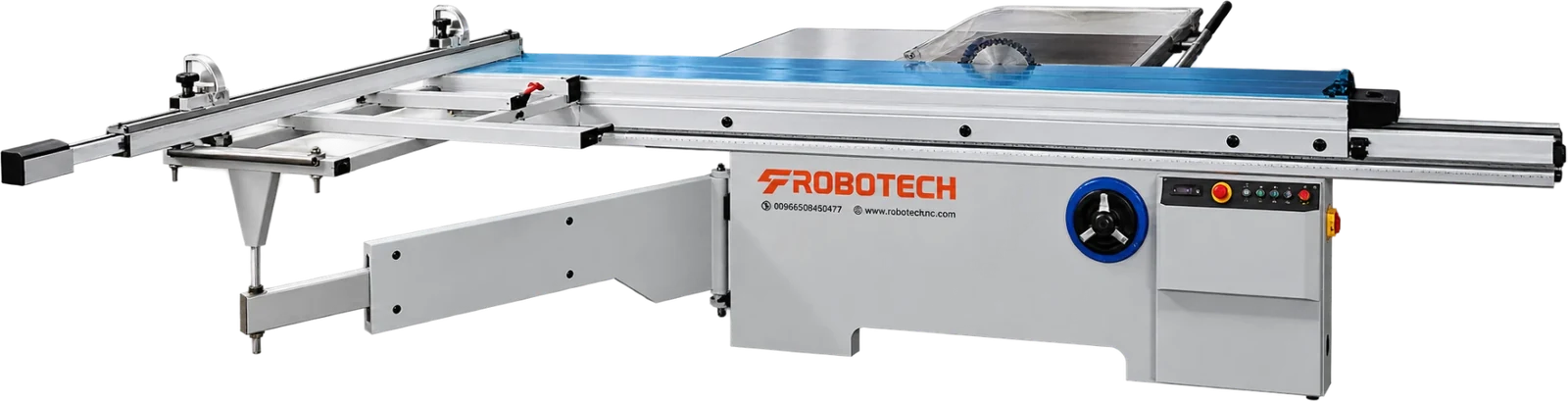
| Sliding table saw | Cuts panels to size without chipping | From day one |
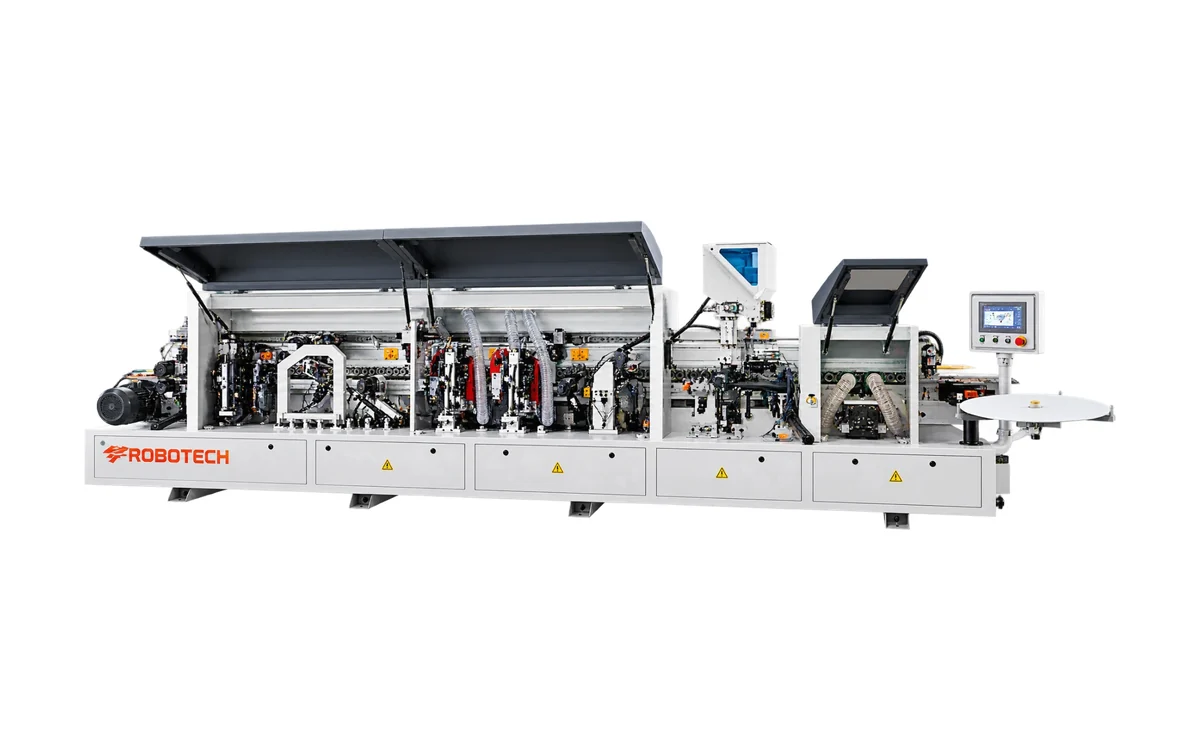
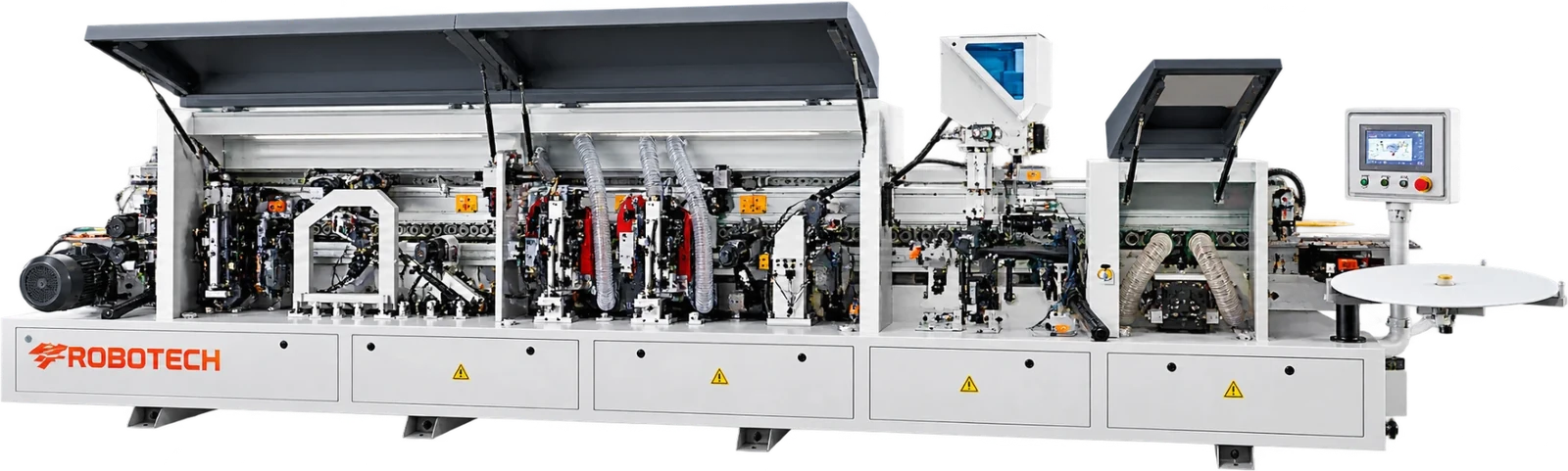
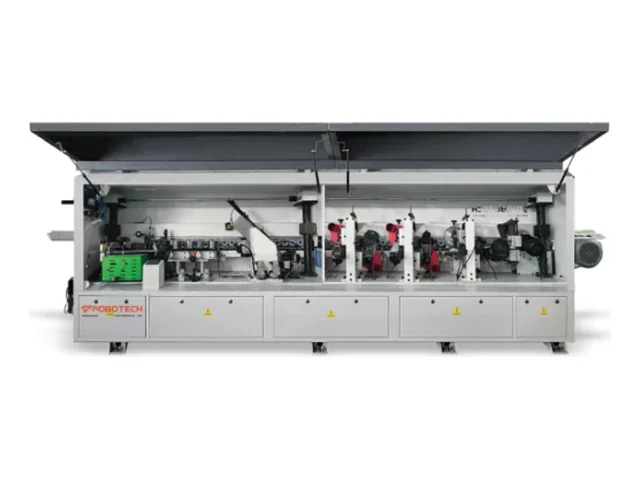
| Edge banding machine | Applies and trims edging automatically | From day one or when regular production starts |
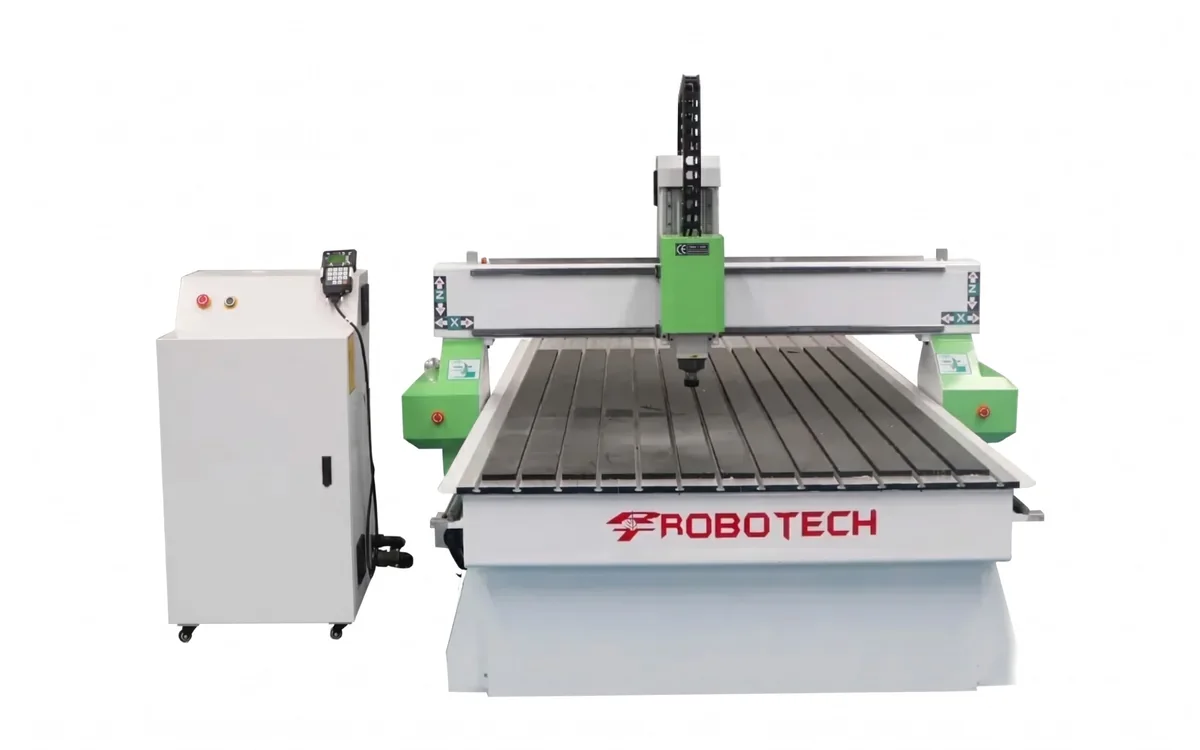
| CNC router | Automatic cutting, drilling and milling from the design file | As production grows or designs get complex |
| Air compressor | Runs the machines and pneumatic tools | From day one |
| Dust extractor | Keeps the workshop clean and workers safe | From day one |
The buying order in stages
Stage one: the starter workshop
Start with a sliding table saw with a scoring blade and an edge banding machine. These two cover the two most important stages for product quality, and let you compete on edge finish and accurate sizes from the start. Drilling at this stage can be done with precise hand tools.
Stage two: growth and regular production
As demand grows, manual cutting and drilling become the slowest stage. This is where a CNC router comes in: it cuts a full panel into finished parts and drills and mills in the same job from the design file, and nests parts on the sheet to reduce waste. Selection details are in the guide how to choose a CNC router for your workshop.
Stage three: expansion
With high volume, you can add a faster edge bander, a router with automatic tool change, or specialist machines for your type of work.
Preparing the workshop before the machines
- Power: most industrial machines need a 3-phase supply, so check it is available with enough capacity before buying.
- Compressed air: the edge bander, the router's vacuum table and pneumatic tools need a suitable compressor.
- Space and flow: arrange the machines along the panel's path: storage, then cutting, then edge banding, then drilling, then assembly.
- Dust extraction: chips harm machines and workers, and reduce edge banding quality.
- Floor: level and able to carry the machines' weight.
Don't buy a machine without after-sales support
One machine stopping in the production line stops the whole workshop. Choose a supplier that provides installation, training and warranty, with spare parts available locally. With Robotech you get all of this, with spare parts in Riyadh and Dammam and technical support. Details are on the maintenance and spare parts page.
Send us your type of work, production volume and workshop space on WhatsApp, and we will recommend the right machines for your stage with a quote the same day.
Drilling: the stage many forget
After cutting and edge banding, panels need holes for hinges, joints and shelves. Drilling by hand is slow and gives mismatched holes, so wardrobes come out crooked or hard to assemble. The solution is drilling machines:
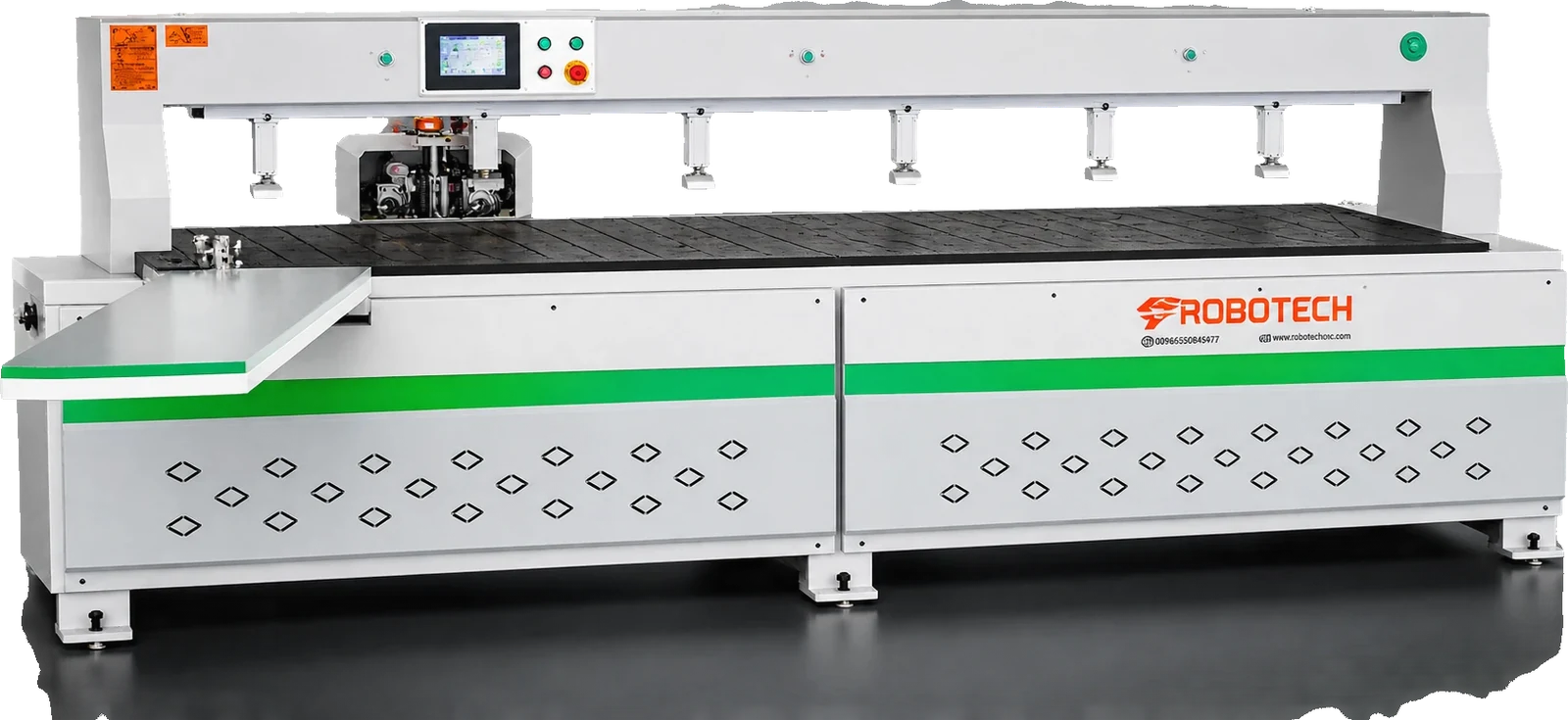
- [Side drilling machine](/products/side-hole-drilling-machine): drills joint holes in the edges of panels 10 – 50 mm thick and up to 2450 mm long.
- [Six-row boring machine](/products/six-row-woodworking-drilling-machine) or [four-row](/products/four-row-woodworking-drilling-machine): drills rows of shelf and joint holes in the panel face in one stroke.
- CNC router: can cut, drill and mill at the same time, and suits workshops that want one flexible machine.
Arranging the machines in the workshop
Arranging machines along the panel's path saves a lot of time and effort. The panel comes in through the workshop door, goes to the saw, then the edge bander, then drilling, and finally assembly and packing. The straighter the path with no going back, the less time spent moving panels and the fewer scratches.
- Panel storage close to the loading door and the saw.
- The saw with enough space in front and behind for a full panel length (2440 mm) plus the sliding table length.
- The edge bander with in-feed and out-feed space at least as long as the longest part.
- The drilling and assembly area close to packing and the customer loading area.
- Central extraction with ducting to every machine.
How many workers do you need?
A small workshop with the essential machines (saw, edge bander and drilling) runs with few workers, and automatic machines reduce reliance on high manual skill. What matters is that each worker is trained on their machine and understands its settings and daily maintenance, because most faults come from misuse or neglected cleaning.
With every Robotech machine we train the workers on your site in operation, adjustment and maintenance.
How to split the budget
If your budget is limited, don't spend it all on one premium machine and leave the rest manual. A balance is better: an accurate saw that gives you correct cuts, and an edge bander that gives you clean edges, because these two decide how the finished product looks to the customer. You can add drilling and the router in stage two.
And remember to set aside part of the budget for extraction, power and the compressor, because they are essential to run the machines properly from day one.
Machines to add as the workshop grows
Once the essential machines are in place and orders grow, some machines open new lines of work or raise product quality:
- [Vacuum laminating press](/products/vacuum-laminating-press): for laminating milled doors and fronts with PVC film, which is in demand in modern kitchens.
- [Lock mortising machine](/products/door-lock-mortising-machine): for wooden door factories, preparing the lock pocket and hinges accurately and quickly.
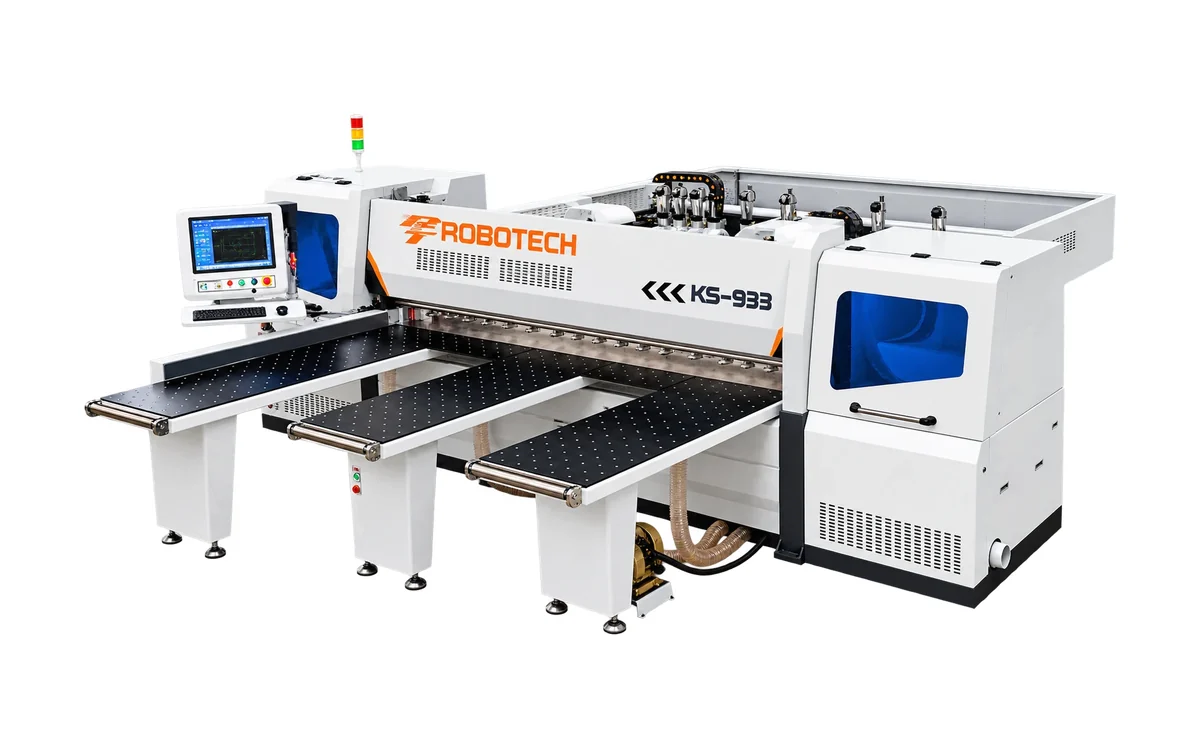
- [KS933 computer beam saw](/products/ks933-computer-beam-saw): for when the sliding table saw becomes the production bottleneck.
- A CNC router with a larger table or automatic tool change: for nested furniture production.
The right expansion follows actual orders, not the catalogue. Watch where work piles up in your workshop, and that is the next machine you need.
Common materials and their effect on the machines
| Material | Use | Note for the machines |
|---|---|---|
| MDF | Milled and painted doors | Its dust is very fine, so extraction is essential |
| Melamine particle board | Wardrobe carcasses | Needs a scoring blade so it does not chip |
| Moisture-resistant MDF | Under sinks and in bathrooms | Same as MDF, with all edges banded |
| Blockboard and solid wood | Premium furniture | Blades and bits suited to hardwood |
Quality check before delivery
A workshop that builds a reputation checks every part before it goes to the customer. Set up a simple check point before packing: confirm part sizes match the plan, that all edges are banded with no gaps or glue residue, and that holes are in the right place so installation goes quickly in the customer's home. Fast installation with no on-site adjustments is the best advertising for your workshop, and a satisfied customer brings you more customers.
FAQ
A sliding table saw with a scoring blade, because it decides the accuracy of every part. Straight after it, an edge banding machine.
Written by the Robotech CNC team
A team specialised in supplying, installing and maintaining CNC and laser machines in Saudi Arabia. On the blog we share what we learn working with workshops and factories.