How to Choose a Press Brake: Tonnage, Bending Length and Drive Type
Bending force, machine length and drive type are the three most important decisions when buying a press brake. This guide explains them in practical terms.

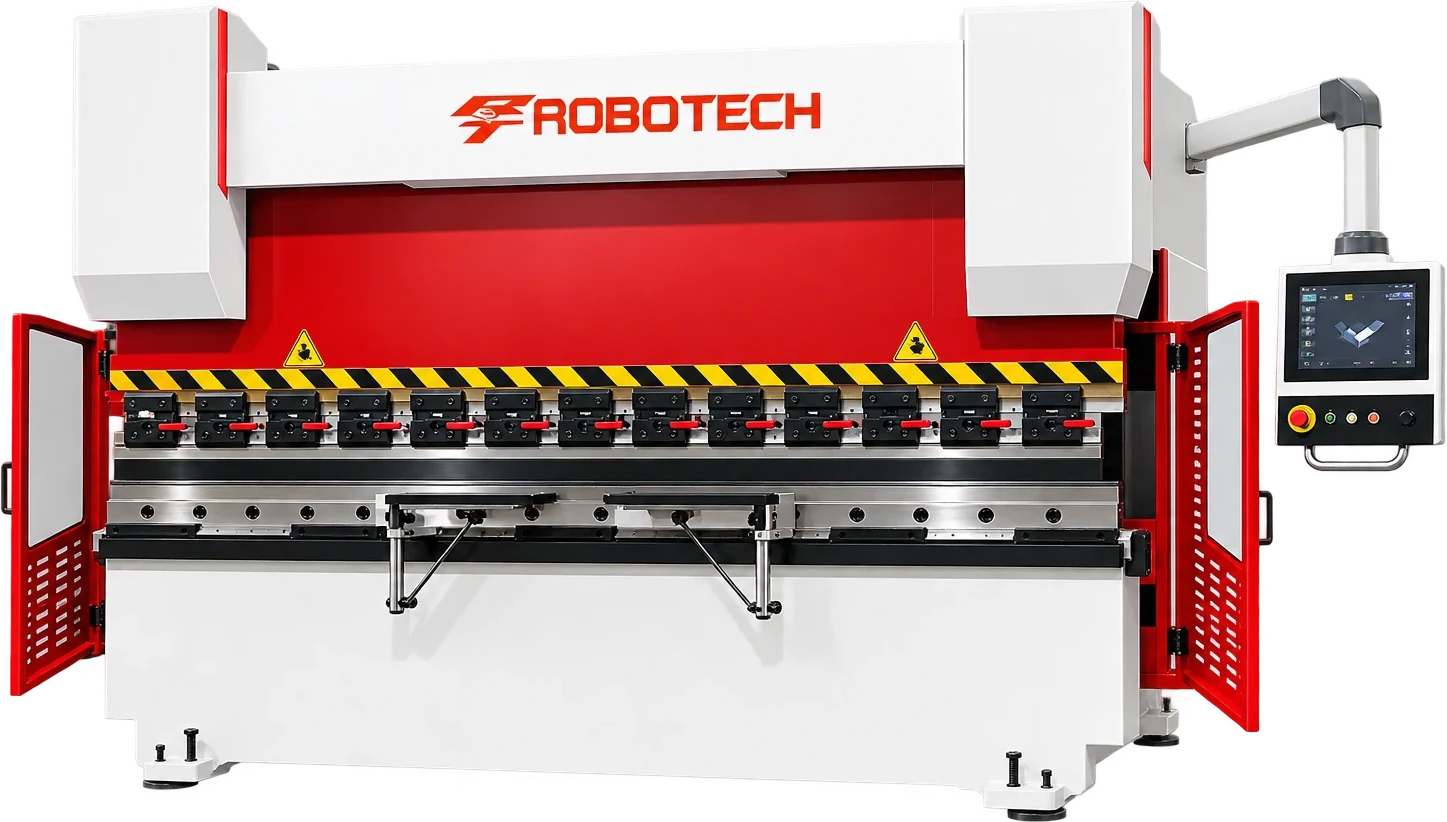
In this article
- 1.How do you estimate the required bending force?
- 2.Bending length
- 3.Hydraulic, hybrid or electric servo?
- 4.The control system and options
- 5.Don't forget what comes before bending
- 6.Tooling: half of bending quality
- 7.Springback and how to handle it
- 8.Examples by type of factory
- 9.When should you consider a panel bender?
- 10.Safety on a press brake
- 11.Before you request a quote: prepare this information
- 12.Summary
- 13.FAQ
The press brake is the heart of any door, cabinet or electrical panel workshop. The wrong choice either limits the thicknesses you can bend or makes you pay for force and length you don't need.
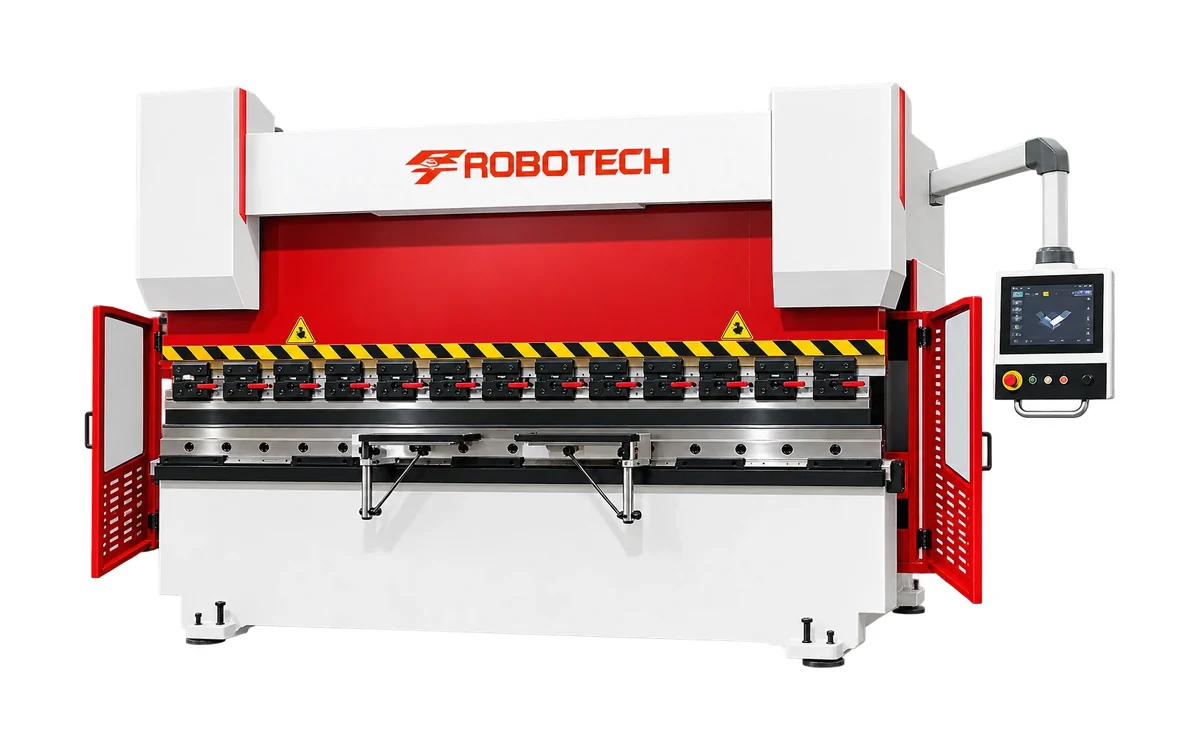
In this guide we explain how to set the right force, length and drive type for your work, with the types of CNC press brakes available.
How do you estimate the required bending force?
Bending force depends on three things: metal thickness, metal strength (mild steel, stainless or aluminium), and the bottom die opening (V). The common workshop rule is that the die opening is about 8 times the thickness for mild steel.
A common approximate formula for mild steel: force per metre (kN) ≈ 650 × thickness² ÷ die opening. For example, a 3 mm sheet on a 24 mm die needs about 240 kN per metre, so for a 3 metre bend you need about 730 kN (around 75 tonnes).
Bending length
Choose the length for the longest part you bend regularly. Lengths of 2500 and 3200 mm are common for door and cabinet workshops, and 4000 to 6000 mm for façades, warehouse doors and long parts. A longer length means a heavier, more expensive machine and more space.
Hydraulic, hybrid or electric servo?
| Type | Advantages | Suited to |
|---|---|---|
| Electro-hydraulic servo | High forces and lengths (up to 6000 mm), precise axis synchronisation | General production and long parts |
| CNC hybrid | Lower power and oil consumption and less noise | Workshops that want running cost savings |
| Torsion bar | Mechanical synchronisation at a reasonable price | General bending and mid-size workshops |
| Electric servo | No oil, fast response, easier maintenance | Small precise parts |
The control system and options
- Control system: interfaces such as Delem and ESA program the bends and store repeat parts.
- Backgauge: the number of axes decides how complex the shapes can be.
- Laser guarding: protects the operator's hands.
- Angle measurement: reduces scrap in precise production.
- Hydraulic tool clamping: speeds up tool changes.
Don't forget what comes before bending
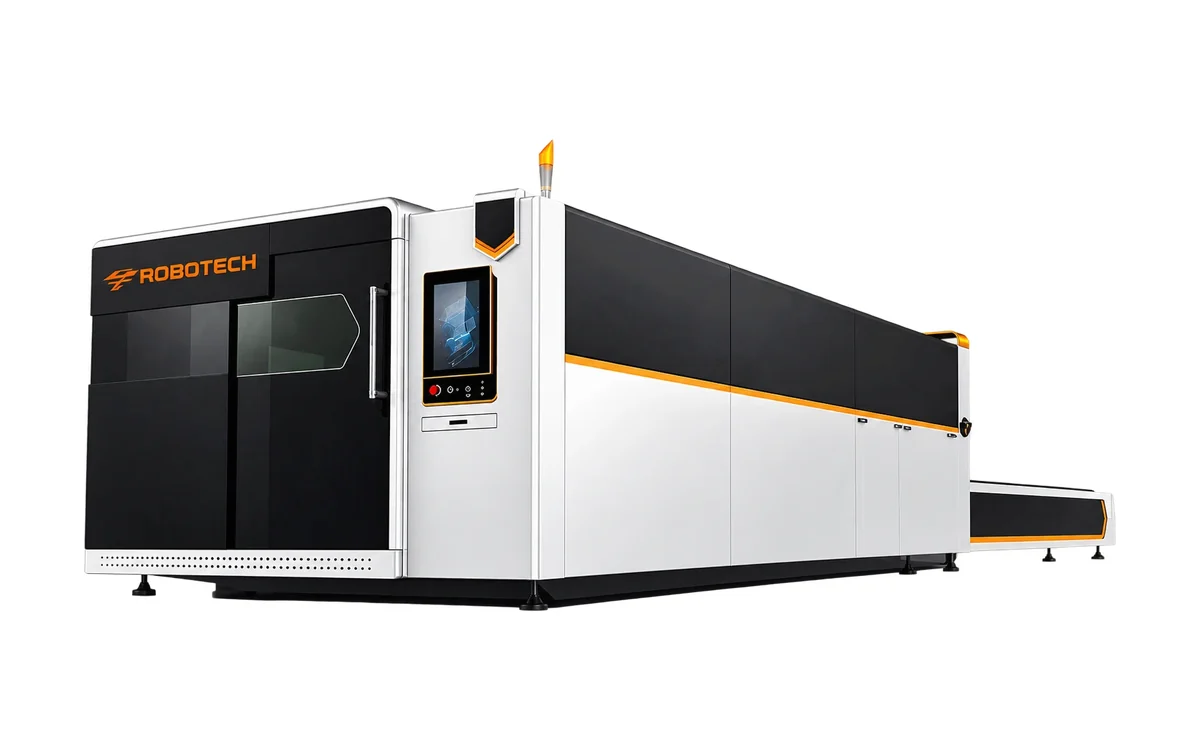
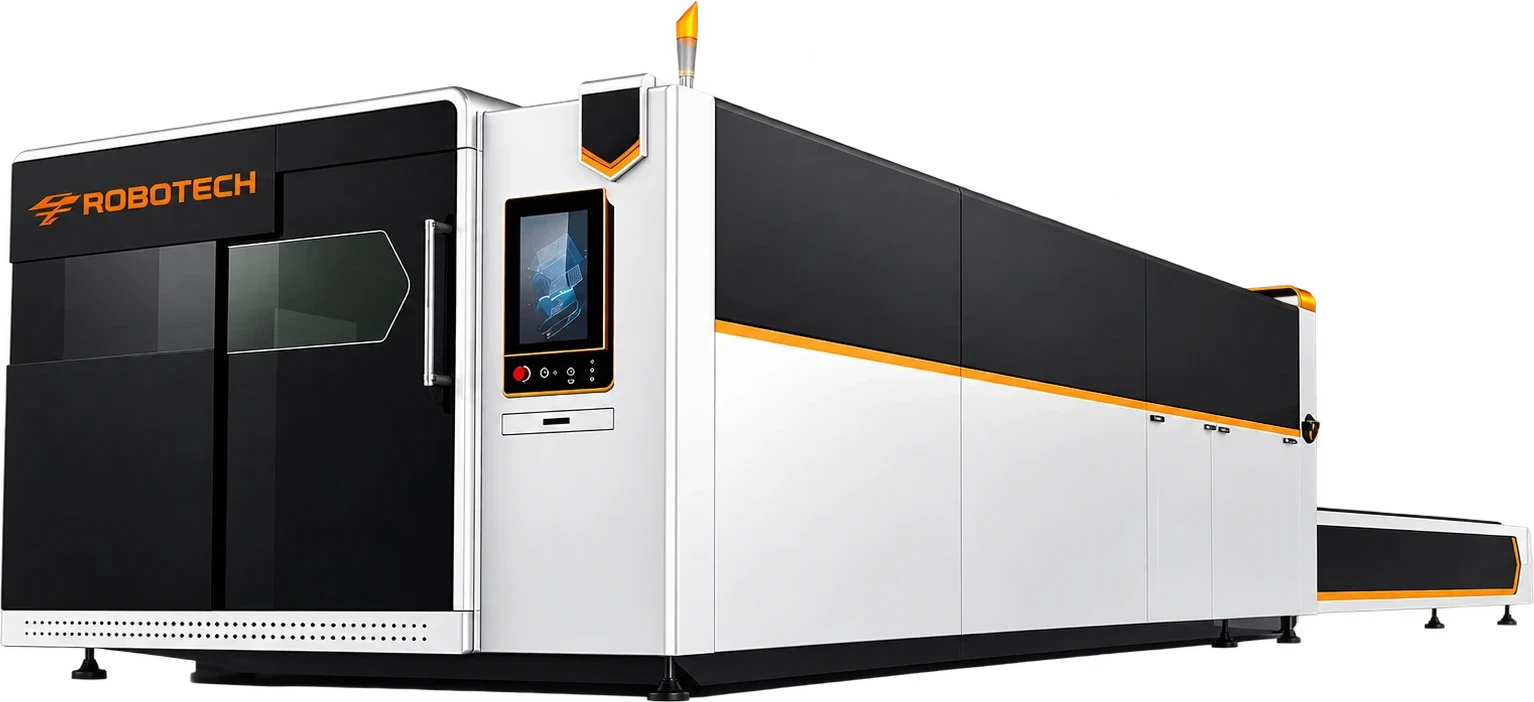
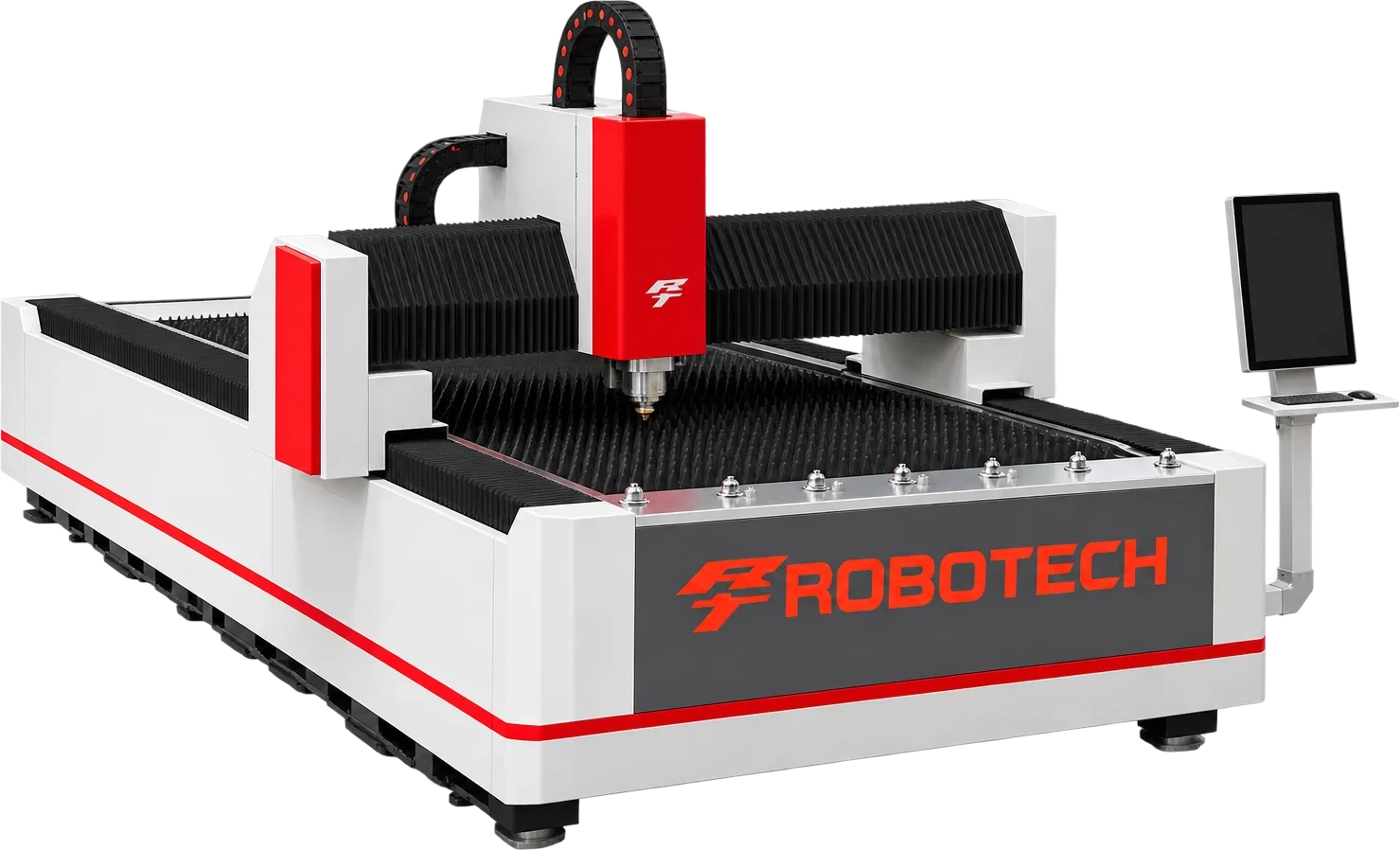
Bending accuracy starts with cutting accuracy. A fiber laser or a hydraulic sheet shear prepares the part to size, and a V-grooving machine gives sharp corners on elevator doors and stainless.
Tooling: half of bending quality
A strong machine with the wrong tooling produces the wrong bends. Tooling consists of the upper punch and the bottom die with its V opening, and the choice depends on thickness and part shape:
- Bottom die opening: the common rule is 6 to 10 times the thickness. A smaller opening gives a smaller inner radius but needs more force; a larger one needs less force but gives a wider radius.
- Minimum flange length: each V opening has a minimum flange length it can bend, so if the part has short flanges you need a smaller opening.
- Punch shape: a straight punch for general bending, and a gooseneck punch for parts with return flanges such as boxes and channels.
- Sectioned tooling: short tool sections you fit side by side to the part length, making box bending easier.
Springback and how to handle it
When the punch lifts, the metal springs back slightly from the required angle; this is called springback. Stainless and high-strength metals spring back more than mild steel, and aluminium varies by grade.
- Air bending: the punch descends to a calculated depth that gives an angle beyond the target by the amount of springback. Modern controls calculate it automatically from the metal type and thickness.
- Angle measurement: some machines have a system that measures the angle during bending and corrects it, very useful for stainless and precise production.
- Crowning: compensates for deflection of the bed and ram over long lengths so the angle comes out even along the full length.
Examples by type of factory
| Type of factory | Usual work | Direction for the choice |
|---|---|---|
| Metal doors and cabinets | 0.8 – 2 mm sheet up to 2.5 – 3 metres long | Medium force and 2500 – 3200 mm length |
| Electrical panels and enclosures | 1.5 – 3 mm sheet with many repeat bends | CNC control with multiple backgauge axes, or a panel bender for volume |
| Stainless commercial kitchens | 1 – 2 mm stainless with visible edges | Angle measurement and surface protection |
| HVAC ducting | Thin galvanised sheet in long lengths | Long bending length and lower force |
| Elevator and façade panels | Long stainless with sharp corners | V-grooving before bending with a long press brake |
The figures in the table are common examples for illustration, and the final choice depends on your actual parts. Details of the types and forces are on the CNC press brakes page: from 250 to 3000 kN, and bending lengths from 1000 to 6000 mm.
When should you consider a panel bender?
If your production is large quantities of the same parts, such as cabinet doors and electrical panels, a press brake relies on the operator's skill in flipping and aligning the part for each bend. A flexible panel bender bends all edges of the sheet automatically with synchronised axes and bending widths up to 2500 mm, reducing reliance on skilled operators, raising output and keeping quality consistent.
Many factories combine the two: a panel bender for repeat parts, and a press brake for special parts and large thicknesses.
Safety on a press brake
- Laser guarding or light curtains: stop the punch if the operator's hand enters the danger zone.
- A covered foot pedal: prevents accidental pressing.
- Operator training: on handling long sheets with supports or two people, because the sheet lifts quickly during bending.
- Clamping tools properly: an unclamped tool can shift or fall.
With every machine we train your team on safe operation, programming and maintenance. For accurate cutting before bending, read how many watts you need in a fiber laser.
Before you request a quote: prepare this information
- The metals you bend (mild steel, stainless, aluminium, galvanised).
- The thinnest and thickest sheets, and the thickness that makes up most of your work.
- The longest part you bend regularly.
- Drawings or photos of your most frequent parts, especially those with short flanges or box shapes.
- Daily or monthly production volume.
- The available power supply and floor space.
With this information we calculate the required force and recommend the length, drive type and tooling, and send you a written quote the same day. The right machine from the start saves you extra tooling, modifications and lost time.
Summary
Bending force is set by thickness, metal type and die opening; length is set by the longest repeat part; and drive type is set by your parts and production volume. Don't buy on the biggest number, and don't forget the tooling, control system and guarding, because they decide bending quality and safety every day. And if your parts repeat in large quantities, compare a press brake and a panel bender before you decide.
Send us drawings of your parts and their thicknesses, and we will work out the right force and length with you.
FAQ
It depends on bending length, die opening and metal type. For mild steel over 3 metres, the required force is usually under 40 tonnes, and stainless needs more. Send us your part details and we will calculate it precisely.
Written by the Robotech CNC team
A team specialised in supplying, installing and maintaining CNC and laser machines in Saudi Arabia. On the blog we share what we learn working with workshops and factories.