Fiber Laser Machine Prices in Saudi Arabia: 8 Factors That Decide the Price Before You Ask for a Quote
Two quotes for two machines "with the same power" can differ a lot in price. This guide explains what raises or lowers the price, and how to compare quotes fairly.
In this article
- 1.1. Laser source power
- 2.2. Cutting table size
- 3.3. Open or enclosed, single table or exchange
- 4.4. The cutting head and auto focus
- 5.5. The control system, motors and frame
- 6.6. Options
- 7.7. What the price includes after the sale
- 8.8. Running cost
- 9.How to compare quotes
- 10.Costs that don't appear in the quote
- 11.How to work out when the machine pays for itself
- 12.Tips for buying in the Kingdom
- 13.Questions to ask the seller before you sign
- 14.FAQ
"How much is a fiber laser machine?" has no single-number answer, because the machine is made of major parts that each come in options at different prices. That is why you find widely different quotes for machines that look similar on paper.
Instead of giving you a number that does not fit your needs, this guide explains the factors that decide the price, so you know what to ask about and can compare quotes fairly. At the end you can request a written quote for your machine the same day.
1. Laser source power
The laser source is one of the most expensive parts of the machine, and its price rises with power. The difference between 1500 and 6000 W, for example, shows directly in the price, in the thicknesses you can cut and in cutting speed. To work out the right power, read the guide how many watts do you need in a fiber laser?.
2. Cutting table size
A larger table means a longer, heavier frame and longer axes. 3000×1500 mm suits common sheet sizes, and larger sizes (4000×2000 and 6000×2000 mm) cost more but save time cutting large sheets.
3. Open or enclosed, single table or exchange
- Open single-table machine: the most economical, and allows loading from several sides.
- Exchange table: load one sheet while it cuts the other, cutting downtime. It raises the price but pays off in high volume.
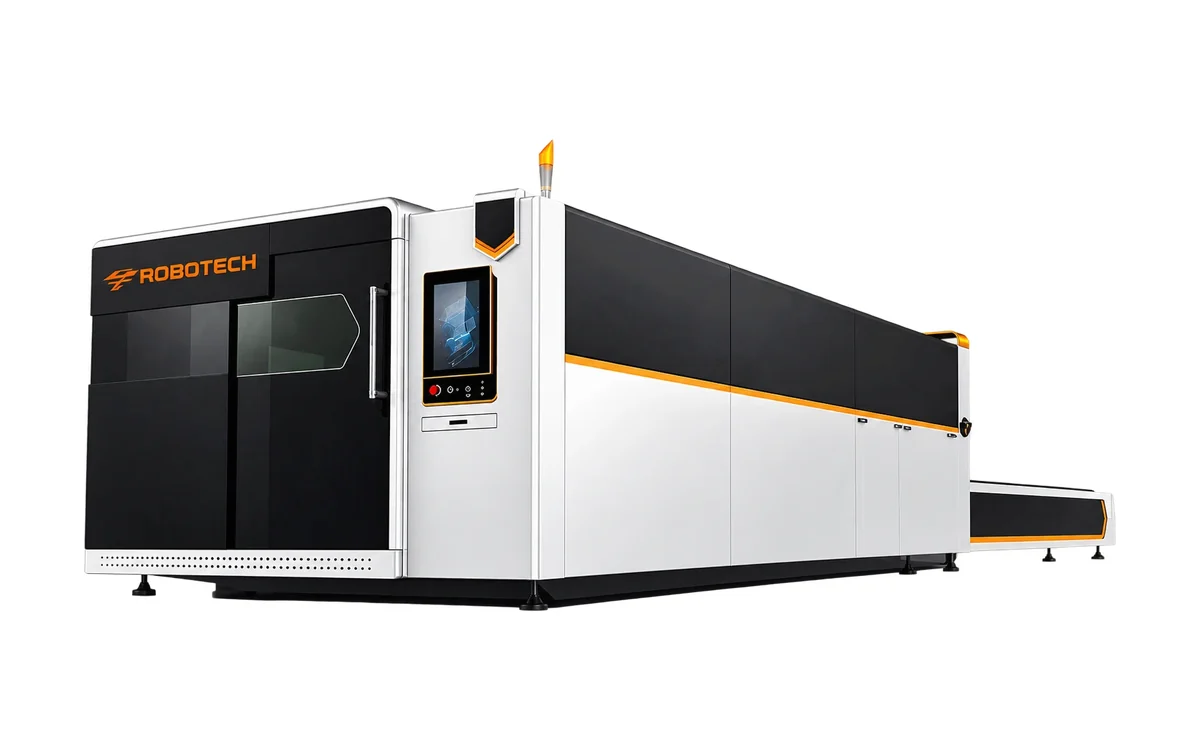
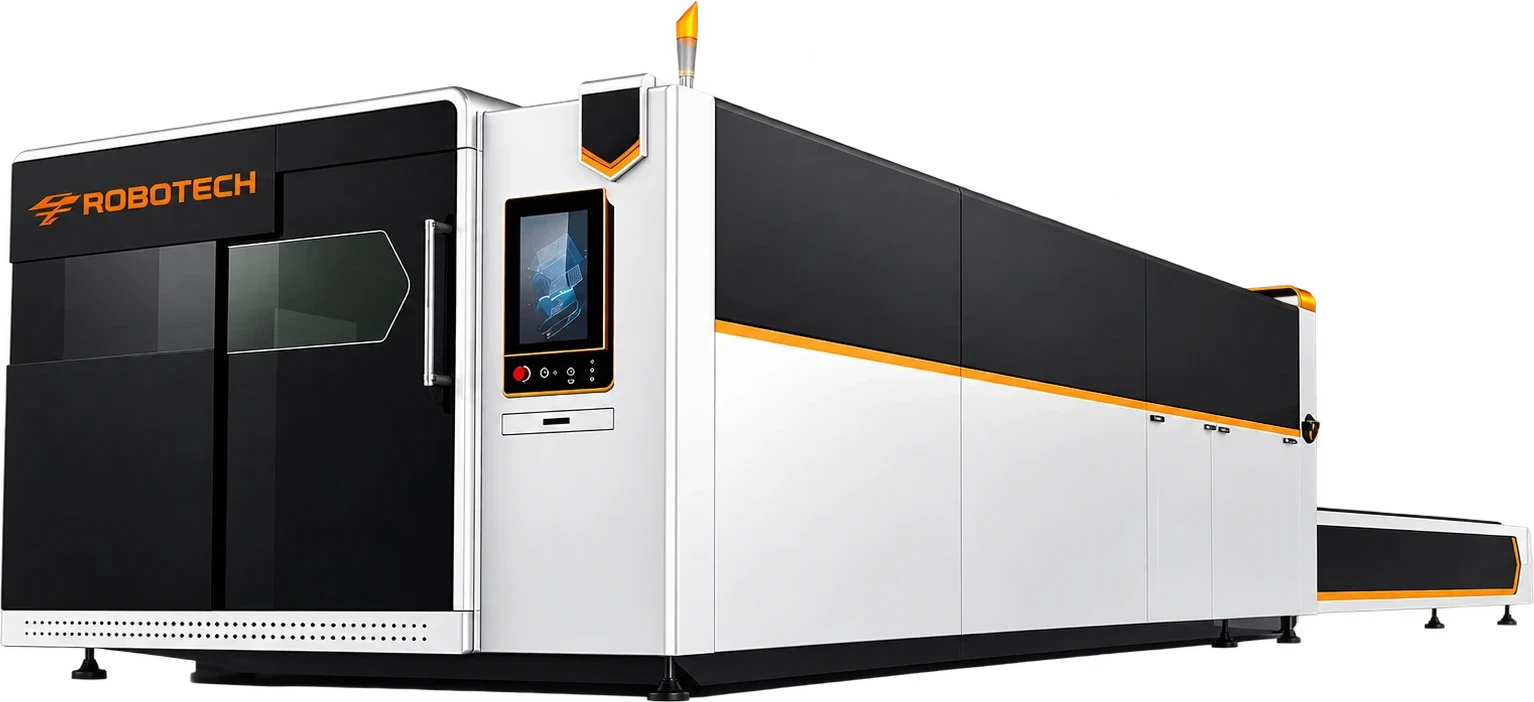
- Fully enclosed machine: better protection and isolation, often with high powers, and a higher price.
4. The cutting head and auto focus
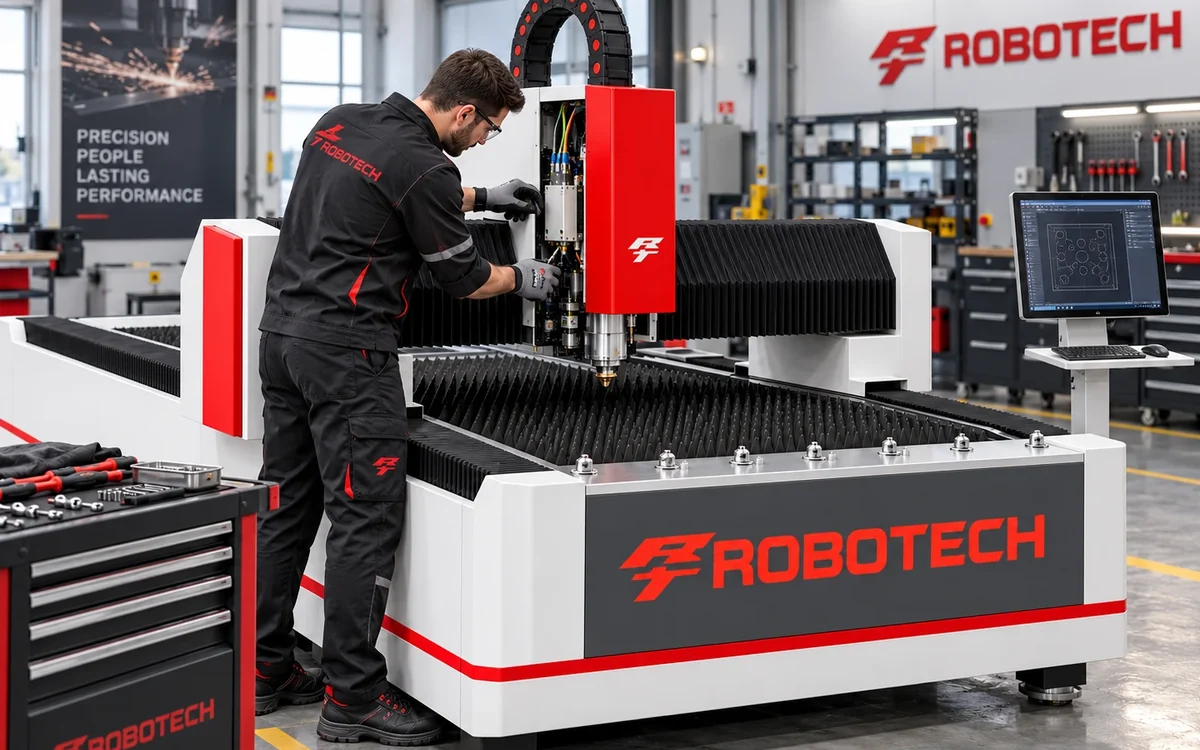
The cutting head focuses the beam on the metal. An auto-focus head sets the focal point for the metal and thickness with no manual adjustment, saving setup time and reducing errors. A simpler head is cheaper but needs more operator intervention.
5. The control system, motors and frame
The control system decides ease of operation and how parts are nested on the sheet to reduce waste, the (servo) motors decide accuracy and acceleration, and a welded, heat-treated frame keeps the accuracy for years. These parts do not show in the power figure, but they make a difference in quality and life.
6. Options
- A tube cutter for cutting tubes and profiles.
- A water chiller sized for the source.
- An air compressor and dryer if you want to cut with air.
- A voltage stabiliser to protect the electronics.
- Extra software for nesting and production management.
7. What the price includes after the sale
A cheaper quote without installation, training or spare parts can turn out more expensive after the first fault. Make sure the quote states clearly: delivery to your site, installation and commissioning, training, the warranty period and what it covers, and local availability of spare parts and consumables.
Every Robotech machine comes with delivery, installation, training and warranty, with maintenance and spare parts available in Riyadh and Dammam. Details are on the maintenance and spare parts page.
8. Running cost
The purchase price is part of the picture. Count alongside it the cost of assist gas (nitrogen especially), electricity, and consumables such as nozzles and protective lenses. A machine with a lower purchase price and higher running cost may cost you more over the years. Work it out with your own numbers in the running cost calculator.
How to compare quotes
| Item | What to check |
|---|---|
| Power | The same power in both quotes, and the source type |
| Table size | The actual cutting area in millimetres |
| Cutting head | Auto focus or manual |
| Accuracy and acceleration | Positioning and repeat accuracy, and acceleration |
| Options | Chiller, compressor and stabiliser: included in the price or not? |
| After-sales | Delivery, installation, training and warranty period |
| Spare parts | Available locally, and how many days they take to arrive |
Send us your type of work, metals and thicknesses, and we will send you a written quote with the full specifications and inclusions the same day, for the right machine from our fiber lasers.
How to work out when the machine pays for itself
A more expensive machine can be more economical if it pays for itself faster. The simple way to work out the return:
- Work out your current cost: how much do you pay each month to outside cutting workshops, or how much do you lose from orders you cannot fulfil?
- Estimate the expected output: how many hours a day will the machine run, and how many parts per hour on your usual work?
- Subtract the running cost: electricity, gas, consumables, operator salary and maintenance.
- Divide the machine price by the net monthly saving: the result is the approximate number of months to pay it back.
Many workshops that used to outsource cutting find the machine pays for itself faster than they expected, because it saves cutting fees, transport and waiting, and lets them accept urgent orders they used to turn down.
Tips for buying in the Kingdom
- Local spare parts: ask where the parts stock is and how long supply takes. Parts available in Riyadh and Dammam, for example, save many days of downtime compared with ordering from abroad.
- A technician who can reach you: make sure there is a team that can come to your city for installation and faults, not just phone support.
- Training in Arabic: an operator who understands the software and settings gets higher output and fewer faults from the machine.
- A written warranty: ask for the warranty terms in writing in the quote: the period, what it covers (source, head, motors) and what it does not.
- Delivery and installation: state in the quote who handles shipping, unloading, installation and test cutting.
Robotech supplies fiber laser machines with delivery, installation, training and warranty, with spare parts available in Riyadh and Dammam. For details of maintenance and spare parts see the service page.
Questions to ask the seller before you sign
- Exactly which brand is the laser source, cutting head and control system? Ask for it in writing in the quote.
- Does the price include delivery to my site, unloading, installation and test cutting?
- How many days of training, and does it cover the software, nesting and daily maintenance?
- What is the warranty period and what does it cover? Are there scheduled maintenance visits?
- Where is the spare parts stock, and how long does it take to supply a key part if it fails?
- Do you have customers in my area I can visit or talk to?
- Which consumables come with the machine, and roughly how long do they last?
A seller confident in their machine and service answers these questions clearly and in writing. If you find evasion or vague answers on the warranty and parts, that is a sign to watch, even if the price is tempting.
FAQ
Because the price changes with power, size and options, and a general figure can mislead you. We send you a written quote for your machine with the full specifications the same day on WhatsApp.
Written by the Robotech CNC team
A team specialised in supplying, installing and maintaining CNC and laser machines in Saudi Arabia. On the blog we share what we learn working with workshops and factories.