CNC Press Brake Prices in Saudi Arabia: The Tonnage, Length and Drive Type That Decide the Price
Two press brakes "with the same tonnage" can differ a lot in price because of the control, axes and tooling. This guide shows exactly what you are paying for.

In this article
- 1.1. Tonnage
- 2.2. Bending length
- 3.3. Drive type
- 4.4. The control system and axes
- 5.5. Tooling
- 6.6. Options
- 7.7. After-sales support
- 8.How to compare two quotes
- 9.Used or new press brake?
- 10.Site preparation costs
- 11.Which machine suits your workshop?
- 12.Questions to ask the supplier before you sign
- 13.The warranty: what to check in the quote
- 14.Delivery and installation in your city
- 15.Summary
- 16.FAQ
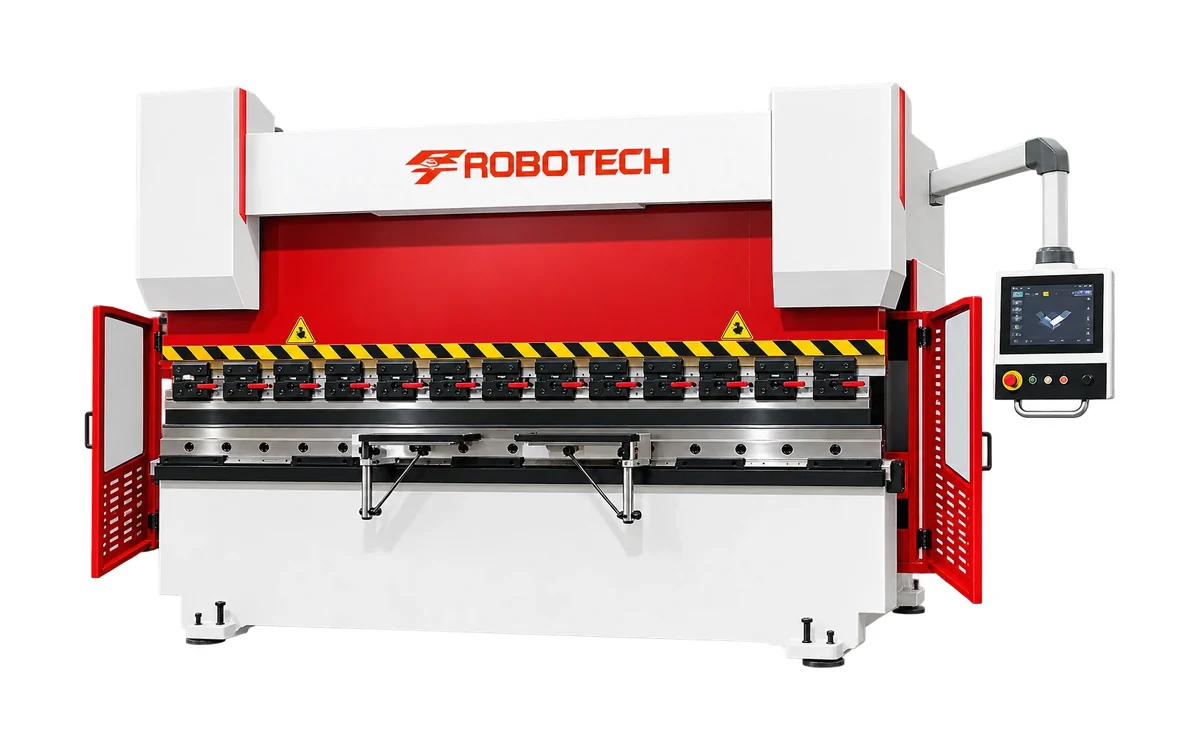
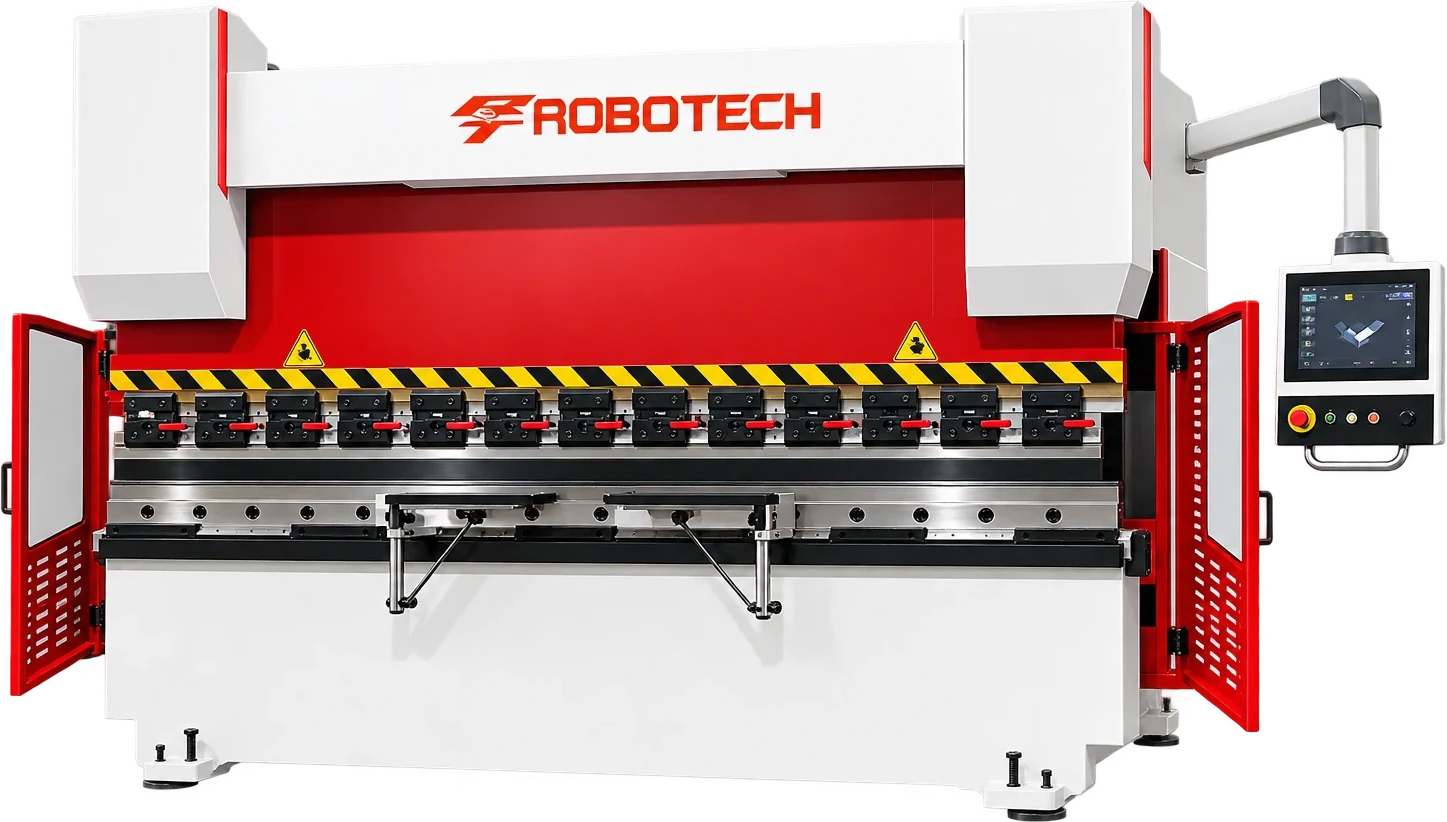
The press brake is one of the most important machines in door, cabinet, electrical panel and commercial kitchen workshops. Its price varies a lot between models, even at the same tonnage, because the control, axes, drive type and tooling all make a difference.
We don't publish figures on the site because the price changes with the specifications, but here we explain what decides the price so you can choose and compare correctly. Details of the types are on the CNC press brakes page.
1. Tonnage
Tonnage decides the thickest sheet you can bend and over what length. Robotech machines come from 250 to 3000 kN (about 25 to 300 tonnes) depending on type. The higher the force, the bigger the machine and its price.
2. Bending length
Bending length runs from 1000 to 6000 mm depending on type. 2500 and 3200 mm are common for door and cabinet workshops, and 4000 to 6000 mm for façades, warehouse doors and long parts. A longer length means a heavier, more expensive machine and more space.
3. Drive type
| Type | Force and length | Note on price |
|---|---|---|
| Torsion bar | 400 – 3000 kN / 1600 – 6000 mm | The most economical for general bending |
| CNC hybrid | 500 – 2100 kN / up to 4000 mm | Saves on electricity and oil |
| Electro-hydraulic servo | 500 – 2500 kN / 1600 – 6000 mm | Higher accuracy and synchronisation |
| Electric servo | 250 – 600 kN / 1000 – 2500 mm | Fast and precise for small parts |
4. The control system and axes
This is one of the biggest price differences. Systems such as Delem and ESA program the bends, store parts and calculate springback, and HK is a more economical option. The number of backgauge axes decides how complex the shapes can be: two axes for simple work, and 4 or more for complex parts and fast production.
5. Tooling
Tooling (the upper punch and bottom die) is a major part of the cost. Ask: which tools come with the machine? Are they sectioned? Do they suit your thicknesses and part shapes? Special tools such as gooseneck punches for boxes are added as needed.
6. Options
- Laser guarding: protects the operator's hands and stops the punch in danger.
- Angle measurement: corrects the angle during bending, important for stainless and precise production.
- Hydraulic tool clamping: speeds up tool changes.
- Crowning: for an even angle over long lengths.
- Front supports: to carry large sheets.
- Robot cell: for automatic loading and bending in volume.
7. After-sales support
A press brake needs installation on a suitable floor, adjustment, and training on programming and safe operation. Make sure the quote includes this, and that the warranty, parts, oils and sensors are available locally.
How to compare two quotes
- Make sure the tonnage and bending length are the same in both quotes.
- Compare the drive type, control system and number of axes.
- Compare the tooling included.
- Compare the options: guarding, angle measurement and crowning.
- Compare installation, training and warranty.
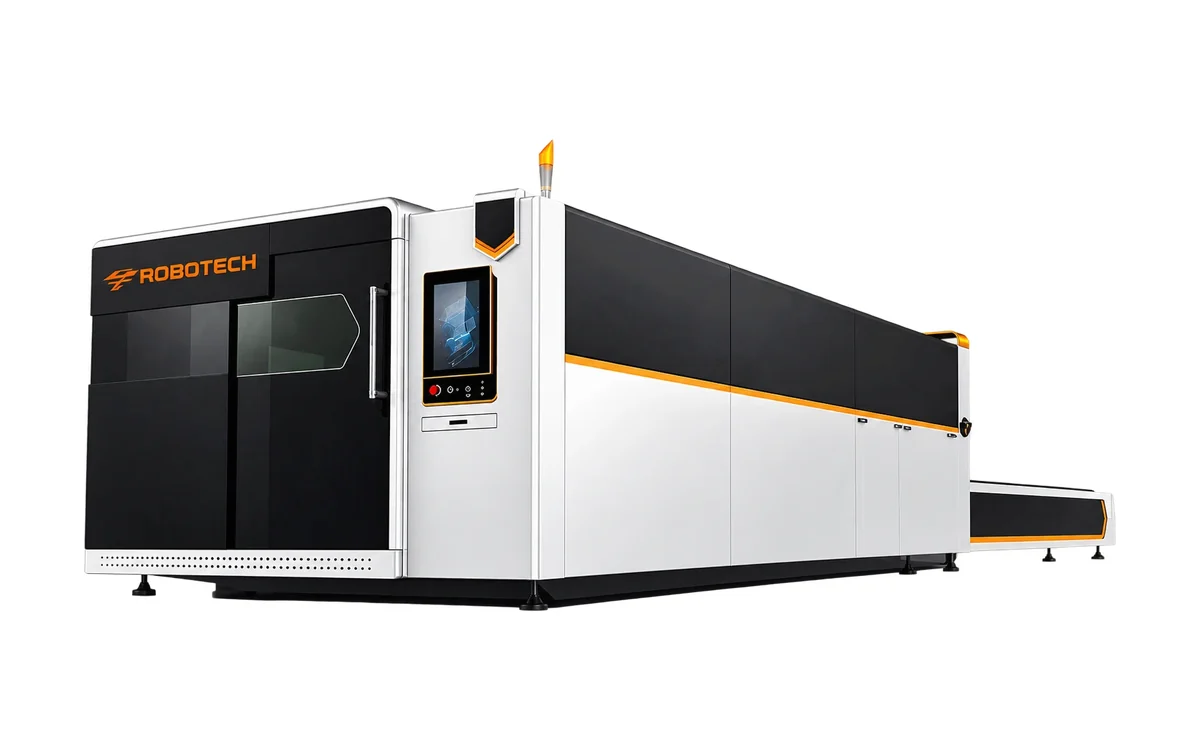
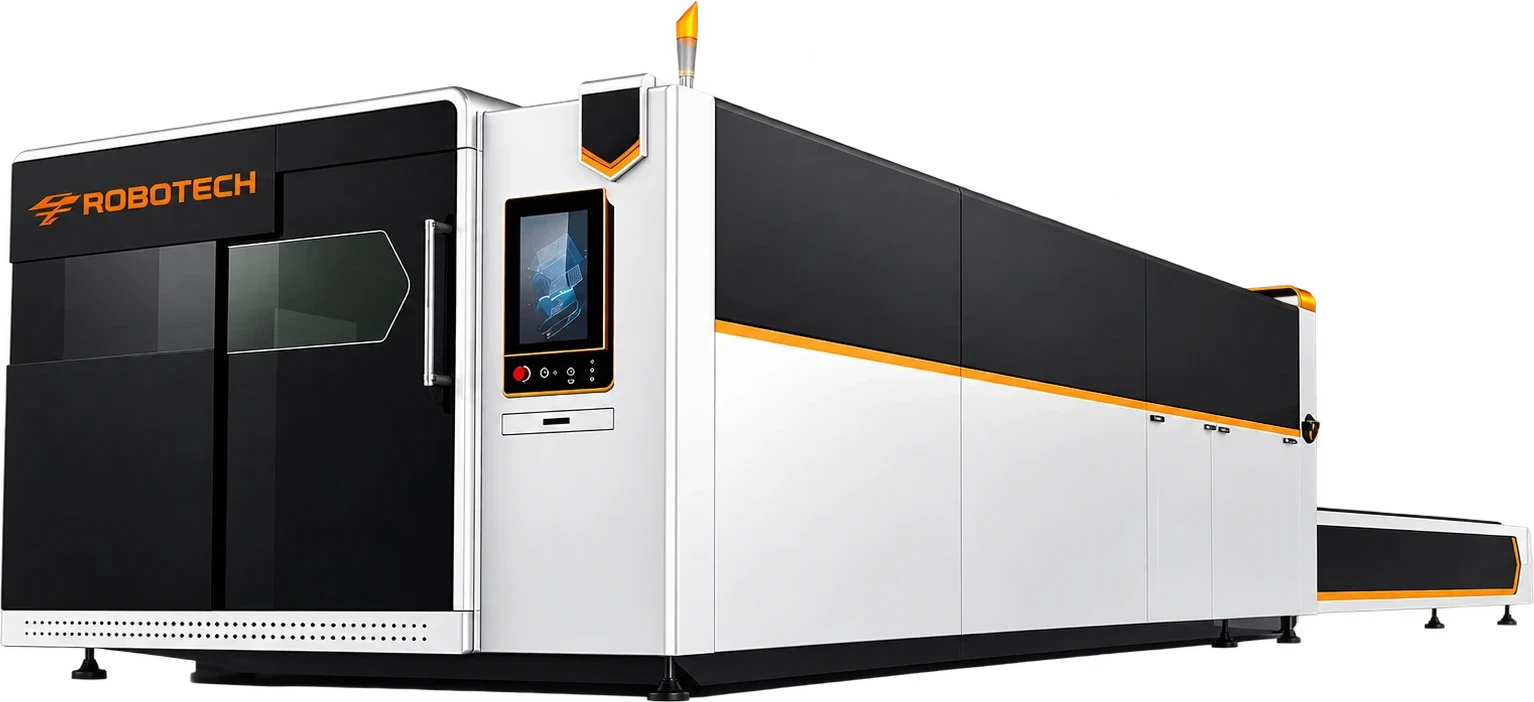
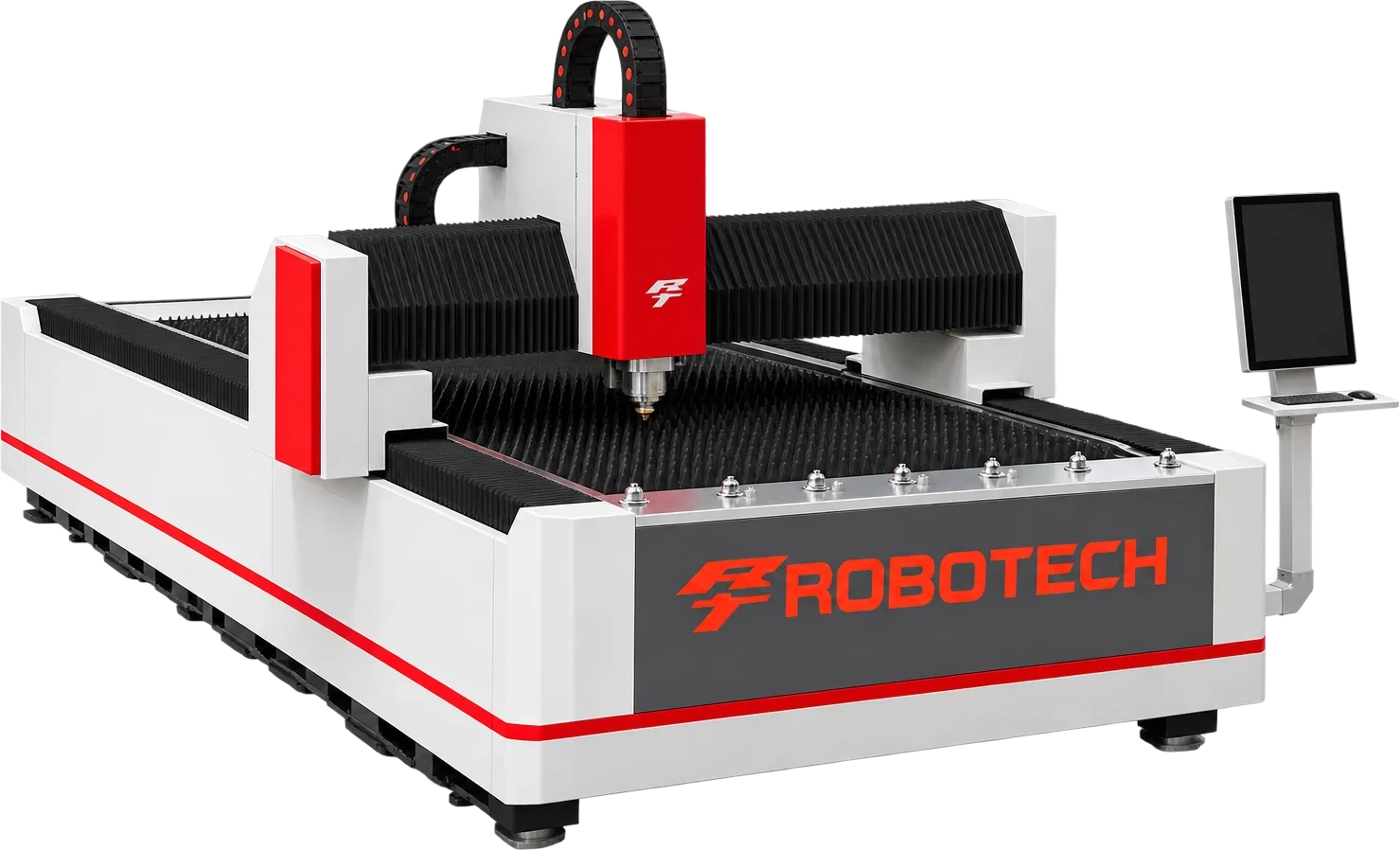
And if your production is large quantities of the same parts, such as cabinet doors, compare with a flexible panel bender. Bending accuracy starts with cutting accuracy; see fiber lasers and sheet shears.
Used or new press brake?
A used machine looks cheaper at first, but it carries risks you need to count: hydraulic oil leaks, a ram and bed out of parallel that affect the angle, and an old control system whose parts may not be available. It usually comes with no warranty, installation or training, and an unknown maintenance history.
| Item | New from a local supplier | Used |
|---|---|---|
| Warranty | Written warranty | Usually none |
| Installation and training | Included | Your responsibility |
| Parts condition | New | Unknown and needs checking |
| Spare parts | Available and known | Depends on model and age |
| Price | Higher at first | Lower at first |
If you choose used, check it running on your material in front of you, ask for any maintenance invoices, and make sure its parts are available before paying.
Site preparation costs
Besides the machine price, there are preparation costs to include in your budget from the start so you are not surprised on installation day:
- Power: press brakes run on 380 V 3-phase, and the capacity varies by tonnage and type.
- Space and floor: a level, strong area, with room around the machine for loading, unloading and workers moving.
- Floor and foundation: large machines are heavy and need a strong, level floor, sometimes a concrete foundation depending on size.
- Ventilation and heat: a shaded, ventilated space extends the life of motors and electronics, especially in the Saudi summer.
Which machine suits your workshop?
| Type of workshop | Direction for the choice |
|---|---|
| Metal doors and cabinets | Medium tonnage and 2500 – 3200 mm length |
| Electrical panels and enclosures | CNC control with multiple backgauge axes |
| Stainless commercial kitchens | Angle measurement and protection for the stainless surface |
| HVAC ducting | Long bending length and lower tonnage |
| Façades and warehouse doors | 4000 – 6000 mm length |
The table is for guidance, and the final decision depends on your part drawings and thicknesses.
Questions to ask the supplier before you sign
- What are the tonnage, bending length and distance between the frames?
- What are the drive type and control system?
- How many backgauge axes?
- Which tooling is included, and is it sectioned?
- Is there laser guarding and crowning?
- Does the price include installation and programming training?
A confident supplier answers these questions clearly and in writing. You can see real photos of our machine handovers and installations at customers on our projects page.
The warranty: what to check in the quote
The warranty is one of the most important differences between press brake quotes, but it is often written in general terms. Ask for the details in writing in the quote:
- Period: how many years, and when does it start: from delivery or from installation?
- What it covers: the hydraulic system or servo motors, the control system, the backgauge and the sensors.
- What it does not cover: consumables that wear with use, and faults caused by misuse or unstable power.
- Response: how long until a technician reaches you, and is there remote support before the visit?
- Spare parts: are replacement parts available inside the Kingdom or ordered from abroad?
A strong warranty with a nearby technician and parts inside the Kingdom is worth a lot if a fault occurs, because every day of downtime means late orders and idle workers.
Delivery and installation in your city
We deliver and install press brakes in Riyadh, Jeddah, Dammam and every region of the Kingdom, train your team on site, and keep spare parts in Riyadh and Dammam. See your city's page: Riyadh, Jeddah, Dammam, Qassim, Makkah, Madinah.
Summary
The price of a press brake is set by tonnage, length, drive type, control, axes, tooling, options and after-sales support. Send us on WhatsApp drawings of your parts, their thicknesses and the longest one, and we will calculate the right tonnage and send you a written quote the same day. And see every category on CNC machines in Saudi Arabia.
FAQ
It depends on bending length, drive type, control, axes and tooling. Send us the details of your work and we will send you a written quote the same day.
Written by the Robotech CNC team
A team specialised in supplying, installing and maintaining CNC and laser machines in Saudi Arabia. On the blog we share what we learn working with workshops and factories.