How Many Watts Do You Need in a Fiber Laser? A Guide to Choosing Power by Metal and Thickness
Power is the most expensive decision in a fiber machine and the one that affects your output most. This guide shows how to set it from your actual work, not from the biggest number in the catalogue.

In this article
- 1.What does laser source power mean?
- 2.An approximate table: thickness by power
- 3.Metal type and gas change the calculation
- 4.A practical way to set the right power
- 5.Don't forget the table size
- 6.Power, speed and cost per part
- 7.What does your workshop need with each power?
- 8.Should I start with low power and upgrade later?
- 9.Common mistakes when choosing power
- 10.FAQ
The first question you face when buying a fiber laser is power: 1500 W? 3000? 6000? The difference between them is large in price and running cost, and the wrong choice is costly either way: too little power limits your work, and too much ties up capital that could have gone into expansion.
In this guide we explain how power affects thickness, speed and edge quality, and give you a practical way to set the right power for your workshop or factory.
What does laser source power mean?
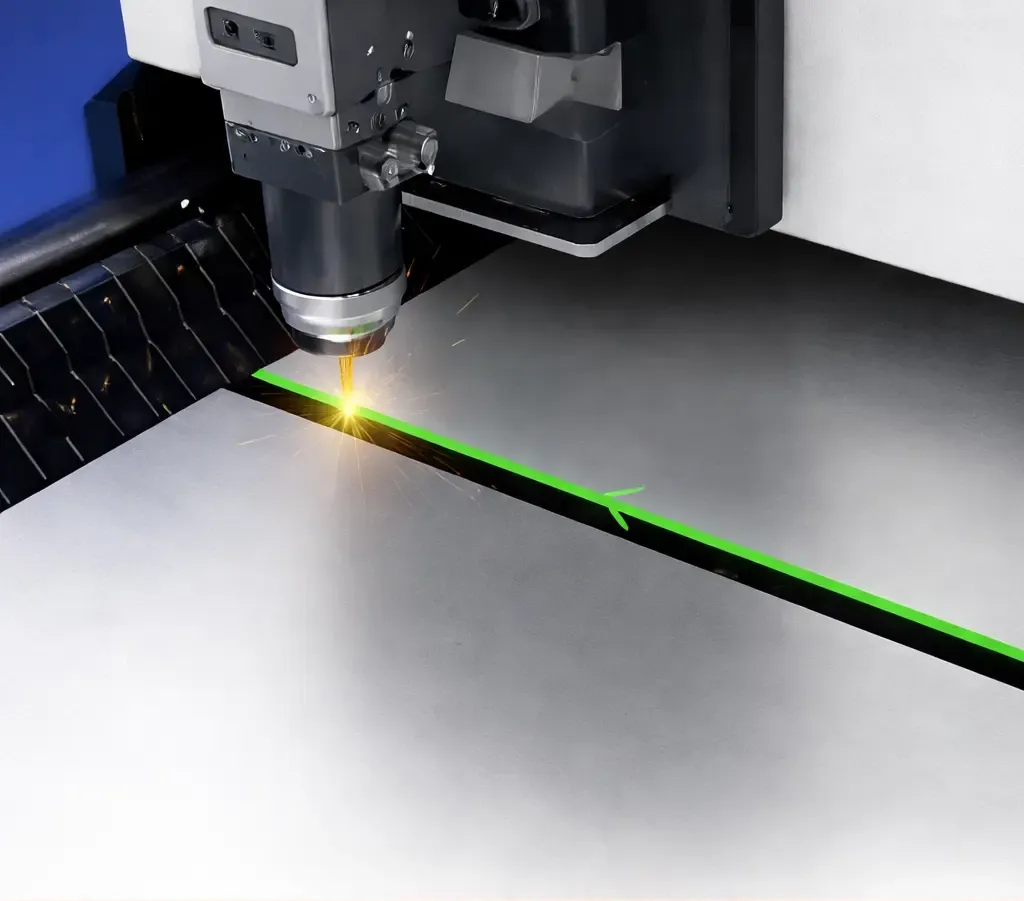
Power (in watts) is the energy of the beam that leaves the laser source and is focused in the cutting head. The higher the power, the more heat the beam can deliver to the metal at once, which shows in three things:
- Maximum thickness: thicker metal needs more energy to melt through its full depth.
- Speed: at the same thickness, higher power cuts faster, raising the number of parts per shift.
- Edge quality: sufficient power gives a smoother edge and less dross under the part.
An approximate table: thickness by power
The table below shows approximate maximum thicknesses common on the market for each power class. Actual figures vary with the laser source, cutting head, gas type and metal quality, so treat them as a starting point for discussion, not a promise.
| Power | Mild steel | Stainless | Aluminium |
|---|---|---|---|
| 1000 – 1500 W | Up to 10 – 12 mm | Up to 4 – 6 mm | Up to 3 – 4 mm |
| 2000 – 3000 W | Up to 16 – 20 mm | Up to 8 – 12 mm | Up to 6 – 10 mm |
| 6000 W | About 25 mm | About 20 mm | About 16 mm |
| 12000 W and above | 30 mm and more | 30 mm and more | 25 mm and more |
Metal type and gas change the calculation
Power alone does not decide the result. The assist gas that blows molten metal out of the cut has a big role:
- Oxygen with mild steel: reacts with the steel and adds heat, helping cut greater thicknesses with less power, but the edge comes out oxidised (dark).
- Nitrogen with stainless and aluminium: gives a clean, bright edge with no oxidation, but needs more power and pressure, and uses more gas.
- Compressed air: an economical option for thin sheet, needing a suitable air compressor and dryer.
That is why a machine of a given power cuts mild steel much thicker than stainless. If most of your work is stainless with a clean edge (commercial kitchens, elevators, façades), size the power for stainless, not mild steel.
A practical way to set the right power
- List your actual work: metal type, thickness and the share of each in your monthly work.
- Identify your usual thickness: the thickness that makes up most of your work; this is the basis.
- Identify the exceptions: if you have rare large thicknesses, you can outsource them to another workshop instead of buying more power for them.
- Work out the production volume: if your work is large quantities of thin sheet, higher power gives you speed that offsets the price difference.
- Think about the next two years: if you plan to take on new work in greater thicknesses, leave a reasonable margin.
Don't forget the table size
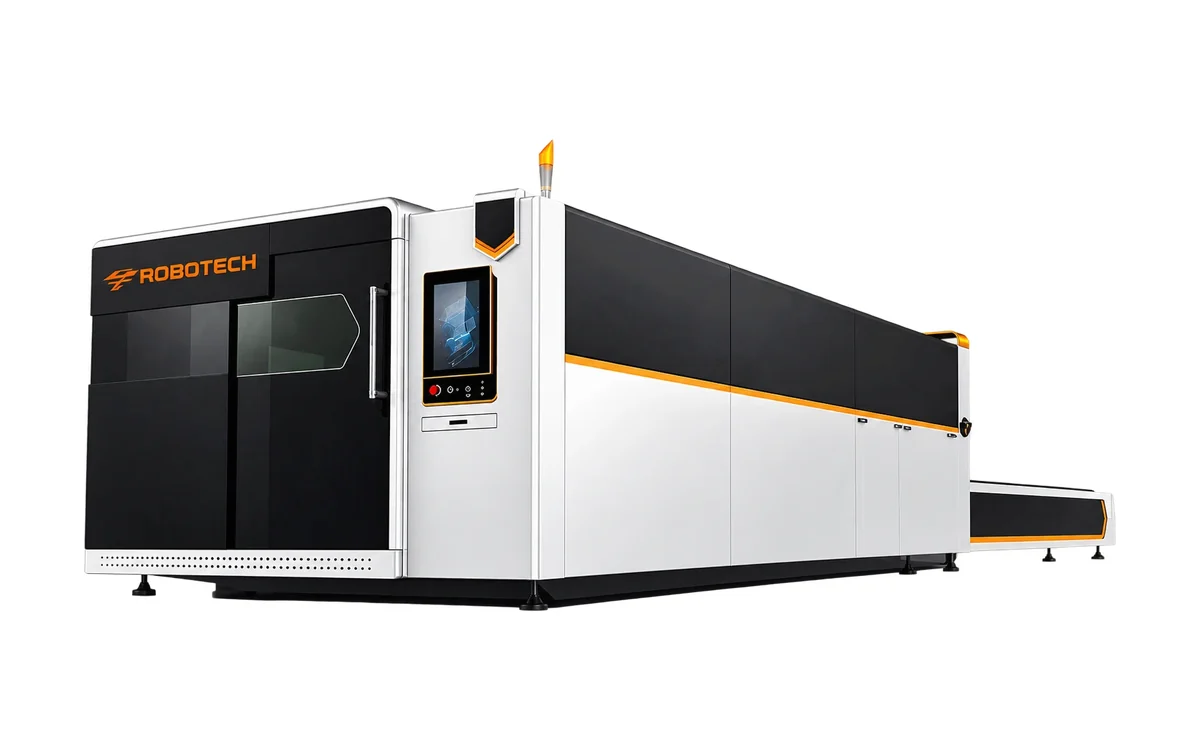
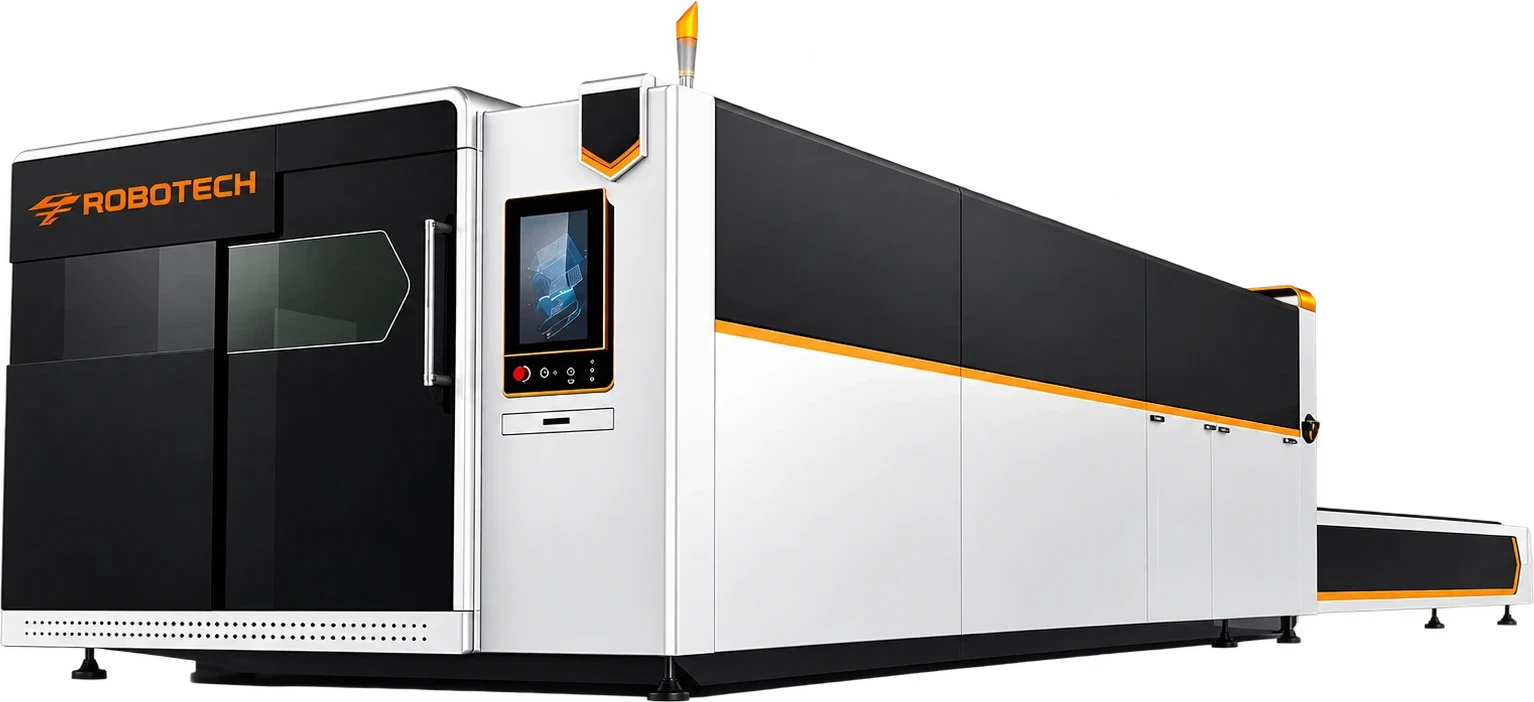
Power decides thickness, and the table decides sheet size. Common sheet on the market measures 1500×3000 mm, which is why the RT-3015 model (3000×1500 mm cutting area) is the most requested. For larger sheets there are 4000×2000 and 6000×2000 mm sizes, and for small workshops and small parts a 1300×1300 mm size.
Model details and specifications are on the sheet metal fiber laser cutting machine page.
Power, speed and cost per part
Many buyers compare powers on maximum thickness alone, forgetting that most work in Saudi workshops is on sheet from 1 to 6 mm. On these thicknesses the difference between powers shows in speed, and speed means more parts in the same shift and a lower cost per part.
A practical example: a workshop cutting door panels from 1.5 mm steel. A 1500 W machine cuts them at a good speed, but a 3000 W machine cuts the same sheet clearly faster, so if the workshop runs two shifts a day with a backlog, the speed difference turns into extra orders every month. If the machine runs two hours a day, the lower power is enough and the difference is not worth it.
| Type of work | Common power | Why |
|---|---|---|
| Metalwork, doors and ornaments | 1500 – 3000 W | Thin and medium sheet, mostly mild steel |
| Commercial kitchens and stainless | 3000 – 6000 W | A clean nitrogen edge needs more power |
| Electrical panels and cabinets | 3000 – 6000 W | Large quantities where speed matters |
| Structures and heavy industry | 12000 W and above | Large thicknesses and continuous production |
Note that the table is for guidance only; the final decision depends on your actual work list.
What does your workshop need with each power?
Higher power does not just mean a more expensive machine; it means bigger site requirements. Before deciding, check these points:
- Power supply: industrial fiber machines run on 380 V 3-phase, and high powers need a power line and breaker with more capacity. Ask an electrician about the loads before buying.
- Cooling: every laser source comes with a water chiller sized for the power. In the Saudi summer the room temperature affects the chiller, so the machine is best placed in a shaded, well-ventilated space.
- Gas: nitrogen cutting on stainless uses more gas with high powers and large thicknesses. Consider whether cylinder supply is enough or you need a tank or a nitrogen generator.
- Fume extraction: cutting produces fumes and metal dust, and a zoned extraction table with a suitable extractor protects workers and the machine.
- Compressed air: if you want to cut with air to save gas, you need a compressor with enough capacity, a dryer and oil filters, because moisture and oil damage the head lenses.
Should I start with low power and upgrade later?
The laser source is a core part of the machine, and changing it to a higher power after purchase is usually not practical, because the cutting head, cooling, power supply and programming are all designed for a given power. So it is best to treat power as a long-term decision.
The practical solution for most workshops: choose the power that covers your current work with a reasonable margin, and if the work grows a lot you will probably need a second machine anyway; then you choose a higher power or larger size for the second one and split the work between the two machines.
Common mistakes when choosing power
- Buying the highest possible power "just in case" with no work to justify it.
- Sizing the power for mild steel when most of the work is stainless.
- Ignoring the cost of gas and electricity with high powers.
- Treating the catalogue's maximum thickness as the daily production thickness.
- Forgetting to prepare the power supply and cooling for the chosen power.
Send us your metal types, thicknesses and workload on WhatsApp, and we will recommend the right power and table size with a quote the same day. To see what affects the price besides power, read 8 factors that decide the price of a fiber laser.
FAQ
It is enough for most metalwork on thin and medium sheet, such as doors, railings and ornaments. If you regularly work large thicknesses or thick stainless with a clean edge, you need more power.
Written by the Robotech CNC team
A team specialised in supplying, installing and maintaining CNC and laser machines in Saudi Arabia. On the blog we share what we learn working with workshops and factories.