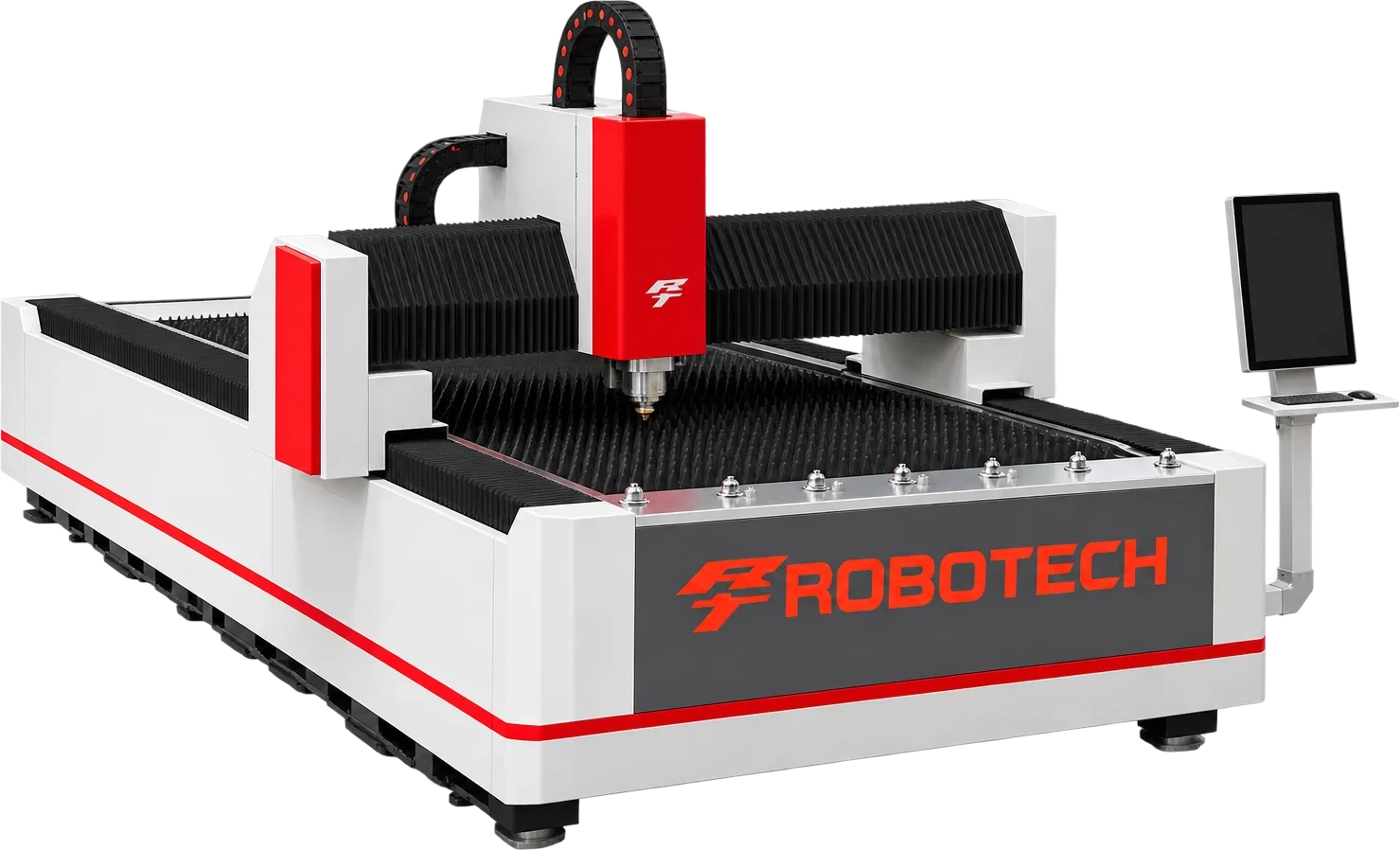
CNC and Laser Machine Maintenance: A Daily, Weekly and Monthly Checklist
Most machine breakdowns start with built-up dust, late lubrication or a dirty lens. Here is a simple checklist you can hang next to the machine.

In this article
- 1.Every day
- 2.Every week
- 3.Every month
- 4.Signs you need a technician
- 5.Why scheduled maintenance matters
- 6.Maintenance for each machine type
- 7.A maintenance log: one sheet that saves you a lot
- 8.Spare parts you should keep in stock
- 9.Summer tips
- 10.When do you need a maintenance contract?
- 11.Train the operator; do not rely on the technician alone
- 12.Noises and signs not to ignore
- 13.Summary
- 14.FAQ
Scheduled maintenance is far cheaper than stopped production. Most of it is simple steps the operator can do after training, and the rest needs a technician.
This checklist is general, and your machine's manual is the first reference for lubrication intervals and oil types.
Every day
- Clean chips and dust off the table and axes at the end of the shift.
- Check that the extractor and its filters are working and clean.
- On laser machines: check the cooling water level and temperature before starting.
- Inspect the bit or nozzle visually, and replace anything damaged straight away.
Every week
- Lubricate the rails and ball screws according to the manual's schedule.
- On CO2 lasers: clean the lens and mirrors with the dedicated solution and wipes.
- On fiber lasers: check the protective lens in the cutting head and clean or replace it.
- Clean the air filters in the electrical cabinet.
Every month
- Check belt tension and bearing condition.
- Check that the table is level and the axes are square.
- On laser machines: change the cooling water and clean the chiller tank.
- Check electrical connections and moving cables.
Signs you need a technician
- An odd noise from the spindle or excessive vibration.
- Parts come out at different sizes from the design.
- A clear drop in laser cutting power.
- Repeated error messages on the controller.
Send us a video of the problem on WhatsApp; some faults we solve remotely. For bigger faults and spare parts, see our page on CNC machine maintenance and spare parts.
Why scheduled maintenance matters
Most CNC machine faults do not happen suddenly. They start with dust building up on a rail, missed lubrication or a blocked filter, and weeks later turn into a fault that stops production for days. Downtime in a factory means late orders, idle workers and unhappy customers, and it usually costs far more than the maintenance itself.
In Saudi conditions in particular, dust and high heat are a machine's two biggest enemies. Dust gets into rails, motors and electronic boards, and heat strains chillers and motors. That is why simple, regular maintenance matters more here than in many other places.
Maintenance for each machine type
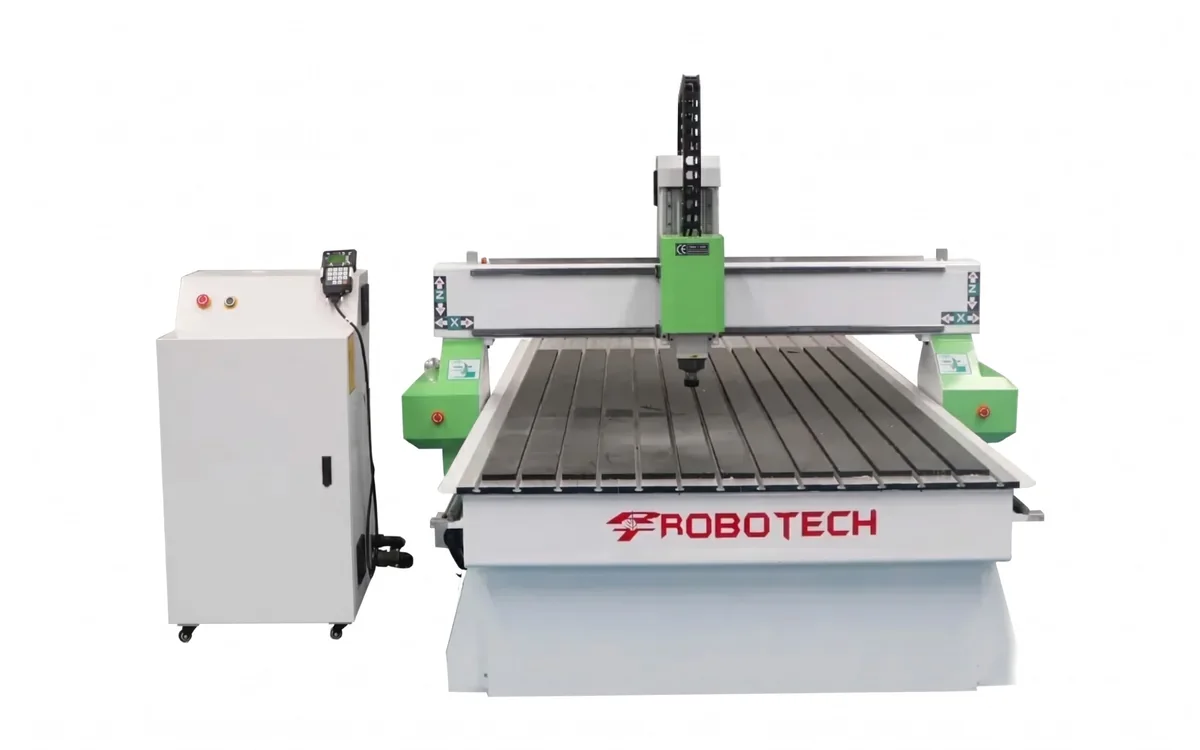
CNC router
- Clean chips from the rails and ball screws daily, and lubricate them according to the manufacturer's schedule.
- Inspect the bits and replace blunt or broken ones.
- With a water-cooled spindle: check that the water circulates and is clean, and change it regularly.
- Check the vacuum table and pump for air leaks.
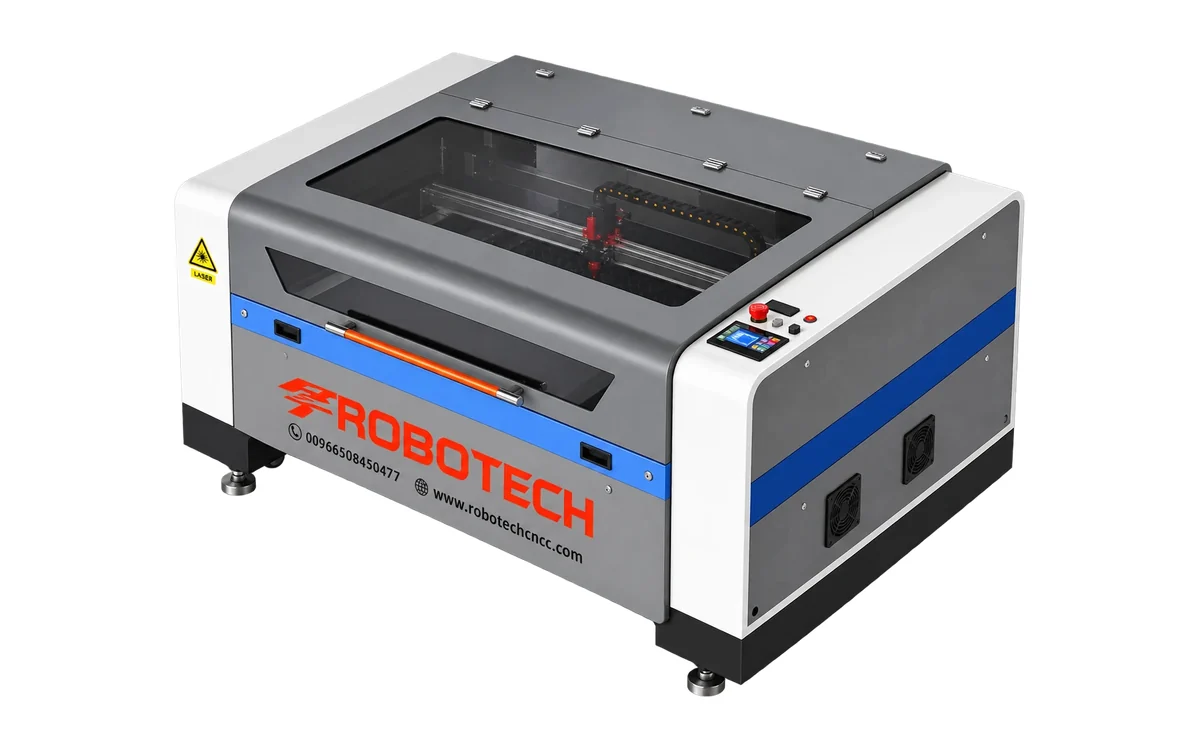
CO2 laser
- Clean the lens and mirrors with the dedicated cleaner and cotton, because any dirt weakens cutting and heats the lens.
- Check the chiller water level and cleanliness, and replace it regularly with distilled water.
- Check beam alignment between the mirrors if you notice weaker cutting on one side of the table.
- Clean cutting residue from the extraction ducts and table, because it is flammable.
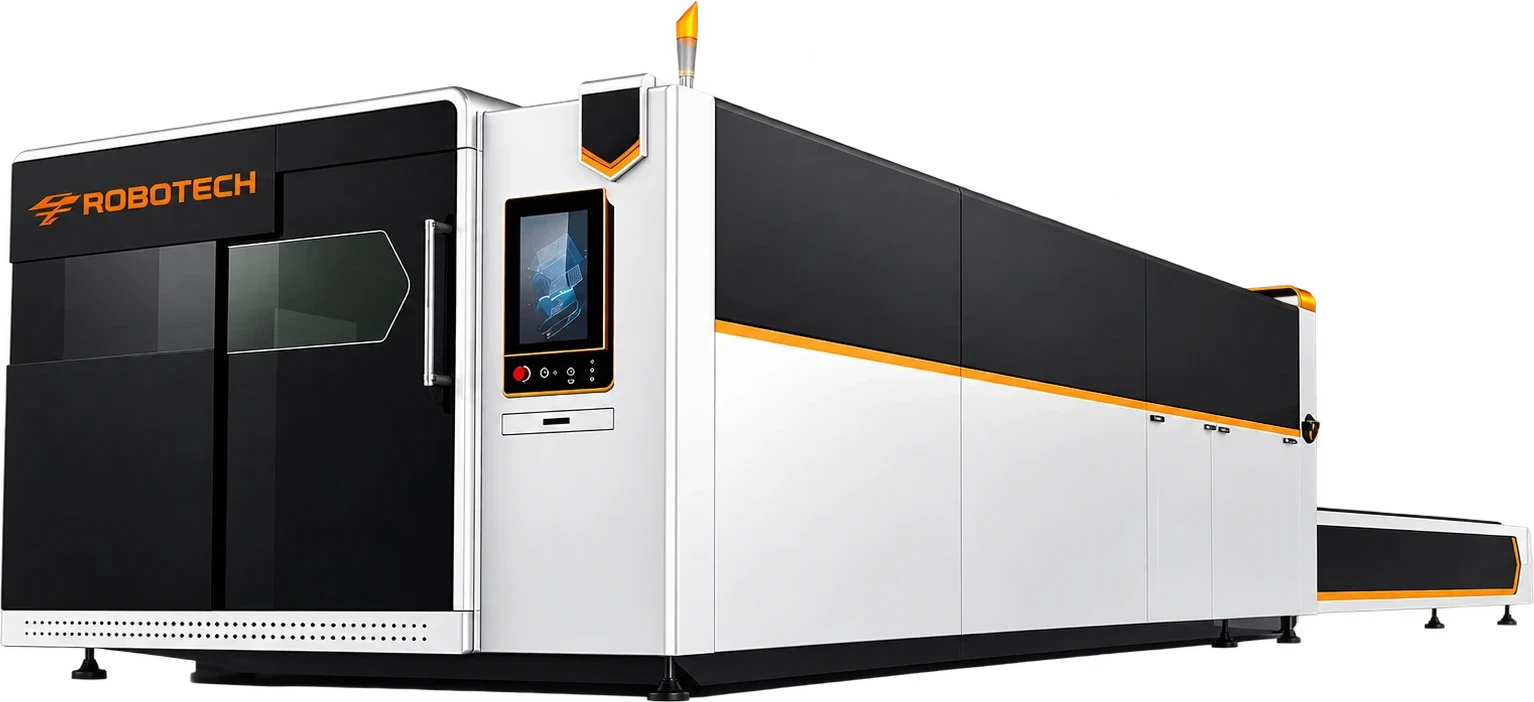
Fiber laser
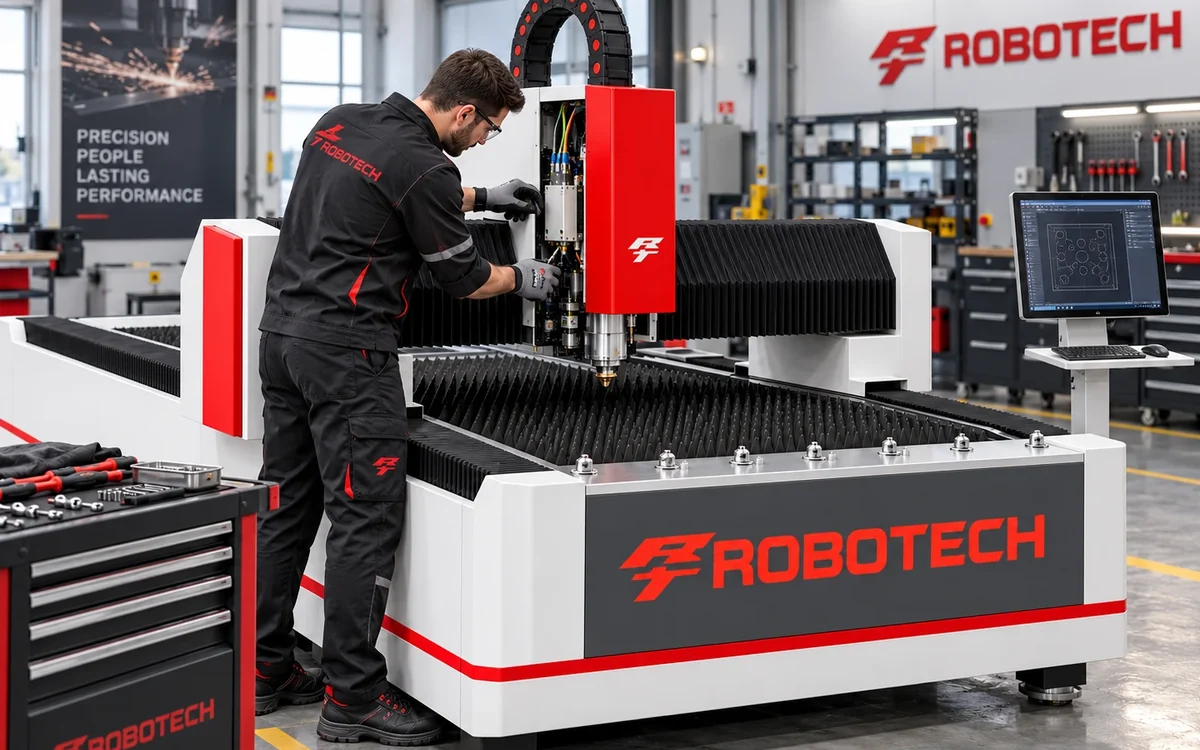
- Check the protective lens in the cutting head daily and replace it if it has spots or burns.
- Check that the nozzle is centred and undamaged.
- Watch the chiller water temperature and clean its filters, especially in summer.
- Clean and lubricate the rails and gantry, and empty the scrap drawers under the table.
- Make sure the compressed air is dry if you cut with air.
Woodworking machines (saws and edge banders)
- Clean the sliding table rail and check the cutting angle regularly.
- Clean the glue pot, pressure rollers and trimming knives.
- Check and tension the motor belts.
- Empty the water trap in the compressed air line.
A maintenance log: one sheet that saves you a lot
Keep a simple log for each machine, on paper or in a spreadsheet on your phone, where you record:
| Date | Machine | Work done | Parts used | Technician |
|---|---|---|---|---|
| — | Fiber laser | Replaced protective lens and cleaned nozzle | Protective lens | Worker's name |
| — | Router | Lubricated rails and cleaned extraction | Grease | Worker's name |
| — | Laser chiller | Changed water and cleaned filter | Distilled water | Worker's name |
The log tells you when each task was last done, shows the technician the machine's history if a fault occurs, and lets you anticipate the consumables you need to order before they run out.
Spare parts you should keep in stock
Some parts wear naturally with use, and waiting until they run out stops the machine. Keep a small stock of them:
- Fiber laser: nozzles in different sizes, protective lenses and a ceramic ring.
- CO2 laser: a spare lens and mirror, fuses, and above all knowing the tube's life and whether a replacement is available.
- Router: basic bits, collets and suitable grease.
- Edge bander: trimming knives, glue and spare edging.
- General: chiller and air filters, and electrical cabinet fuses.
Robotech supplies spare parts and consumables from its stock in Riyadh and Dammam. Ask for the recommended consumables list for your machine on the maintenance and spare parts page or on WhatsApp.
Summer tips
- Turn on the air conditioning or ventilation in the machine area before the shift starts, especially with laser machines.
- Watch the chiller water temperature, and never ignore a temperature alarm.
- Clean chiller filters and electrical cabinet fans more often than usual because of dust.
- Do not place machines or the chiller in front of a door open to sun or dust.
- After sandstorms, clean the whole machine before running it.
When do you need a maintenance contract?
The operator can do daily and weekly maintenance after training. But deeper periodic checks, such as axis calibration, checking the laser source and electrical cabinet, and beam alignment, need a specialist technician. If you have more than one machine or the machine runs continuous shifts, scheduled technician visits save you major faults and extend the machine's life.
Train the operator; do not rely on the technician alone
The operator is the first to notice any change in the machine: a new noise, vibration, weaker cutting or a burning smell. If they are trained to know what is normal and what is not, they stop the machine and report it before the fault grows. That is why we train operators with every machine on operation, daily maintenance and reading alarms, not just on running the software.
- Teach the operator to note anything in the maintenance log, however small.
- Keep the daily maintenance checklist hanging next to the machine.
- Only allow a trained person to change the machine's core settings.
- Set aside ten minutes at the end of every shift for cleaning.
Noises and signs not to ignore
| Sign | Likely cause | What to do |
|---|---|---|
| Grinding noise during motion | Missing lubrication or dust on the rail | Clean and lubricate, and if it continues call the technician |
| Uneven cutting across the table | Beam alignment or table level | Check alignment and level |
| Sudden drop in laser cutting | Dirty lens, damaged nozzle or gas pressure | Check the head and gas |
| Temperature alarm from the chiller | Blocked filter or high room temperature | Clean the filter and improve ventilation |
| Inaccurate part dimensions | Loose belt or wrong zero point | Check the belts and recalibrate |
Summary
Good maintenance does not need a big budget; it needs consistency: daily cleaning, weekly lubrication and checks, a monthly review, a simple log and a small stock of consumables. With Saudi dust and heat, these habits are the difference between a machine that runs for years without problems and one that stops when you need it most. If you need a technician or spare parts, contact us on WhatsApp.
FAQ
According to the machine manual and operating hours. Usually weekly with daily use, and more often with heavy dust.
Written by the Robotech CNC team
A team specialised in supplying, installing and maintaining CNC and laser machines in Saudi Arabia. On the blog we share what we learn working with workshops and factories.