Laser Welding Machines: Are They Worth It Compared with TIG and Stick Welding?
Laser welding has spread quickly in stainless, door and kitchen workshops. This guide shows when it is worth it, and when conventional welding is enough.

In this article
- 1.How does handheld laser welding work?
- 2.A quick comparison
- 3.When is laser welding worth it?
- 4.When is conventional welding still the better fit?
- 5.How to choose the power
- 6.Which metals can a laser weld?
- 7.Power by weld thickness
- 8.When do you need a wire feeder?
- 9.Safety with laser welding
- 10.One machine for three tasks
- 11.Training workers on laser welding
- 12.What does laser welding actually save you?
- 13.Examples from workshops
- 14.Before you buy: test on your parts
- 15.FAQ
In stainless, door and commercial kitchen workshops, welding takes a large share of production time: welding, then grinding, then polishing, and sometimes fixing distortion. That is why handheld laser welding has become one of the machines workshop owners ask about most.
In this article we compare laser welding with TIG and stick welding, and show when laser welding is the right investment.
How does handheld laser welding work?
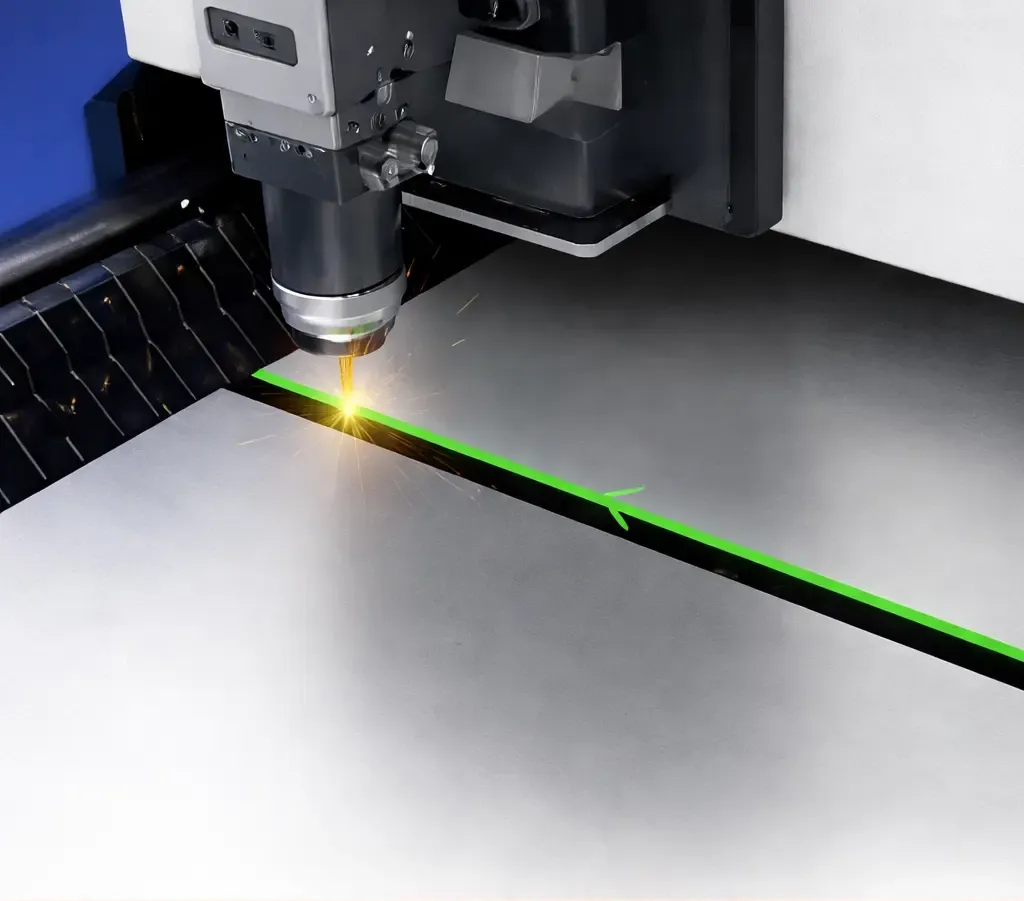
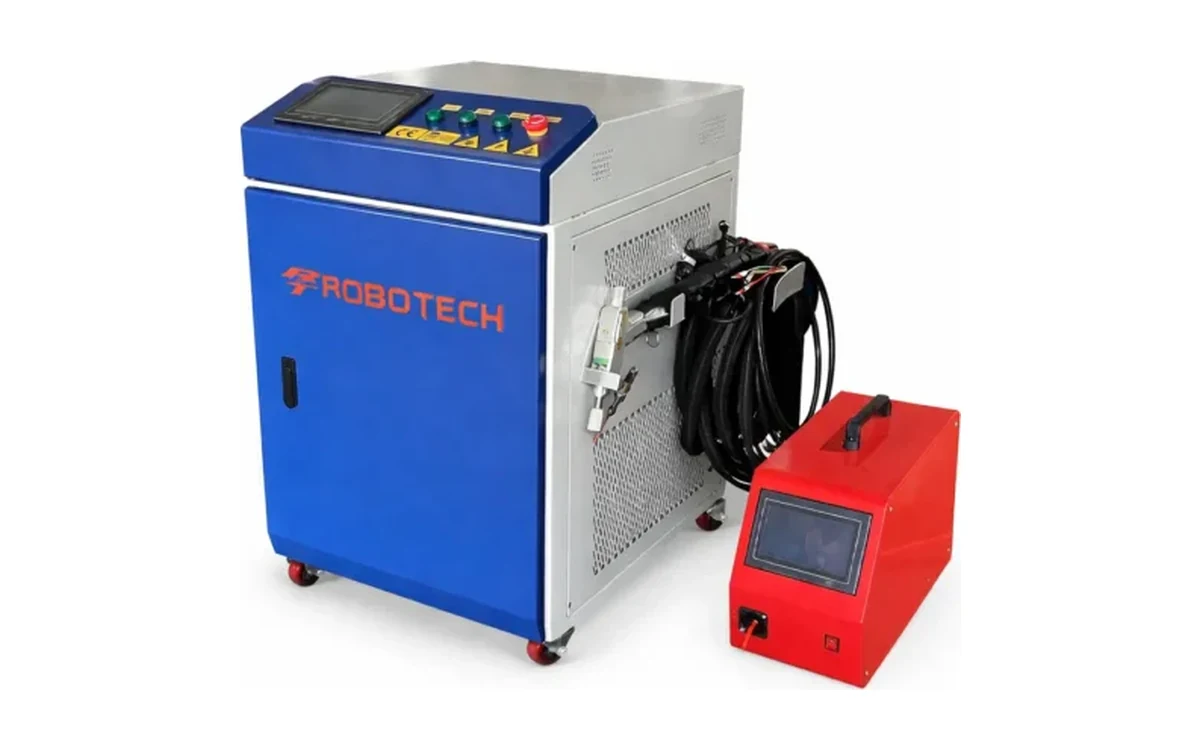
A fiber laser source sends a beam through a cable to a handheld gun. The beam concentrates very high energy into a small spot, melting the edges of the metal and fusing them quickly, with a shielding gas that prevents oxidation. Because the heat is concentrated, the heat-affected zone around the weld is small.
Most modern machines switch to cutting or cleaning by changing the nozzle, so one machine handles more than one task.
A quick comparison
| Item | Laser welding | TIG | Stick |
|---|---|---|---|
| Speed | Very high | Slow | Medium |
| Distortion and heat | Low | Medium | High |
| Grinding after welding | Little | Medium | A lot |
| Weld appearance | Smooth and clean | Clean in skilled hands | Rough |
| Ease of learning | Easy | Needs long experience | Medium |
| Machine cost | Higher | Medium | Low |
When is laser welding worth it?
- Visible stainless: doors, commercial kitchens and railings, where weld appearance matters and grinding is costly.
- High daily production: the speed saves many working hours a month.
- Thin sheet: the low heat prevents warping and discolouration.
- A shortage of skilled welders: a worker learns laser welding faster than TIG.
When is conventional welding still the better fit?
- Heavy structures and very large thicknesses that need several weld passes.
- Welding on outdoor sites and in places exposed to wind.
- Very small workshops with little, occasional welding work.
How to choose the power
Handheld welders usually come from 1000 to 3000 W. Higher power welds greater thicknesses faster. For thin and medium stainless and steel the lower powers are enough, and for greater thicknesses and heavy production choose higher power. See the specifications of the handheld laser welding machine at 1000 to 3000 W.
And if you need rust removal or surface preparation before painting, look at the laser cleaning machine.
Which metals can a laser weld?
Handheld laser welding works on most metals common in workshops, but each metal has its own settings:
| Metal | Suitable? | Notes |
|---|---|---|
| Stainless steel | Excellent | The most common use, a clean weld with hardly any discolouration |
| Mild steel | Excellent | Fast and suited to doors and light structures |
| Aluminium | Good | Needs finer settings and more power because it reflects the beam and conducts heat quickly |
| Galvanised | Good | Needs adjustment because the zinc layer vaporises and produces fumes |
| Copper | Possible | Needs high power and experience in setting it up |
Robotech handheld welders (the RTW series) come in 1000, 1500, 2000 and 3000 W, with MAX or Raycus sources and water cooling, and a fiber cable up to 20 metres long on request, so you can move around large parts easily.
Power by weld thickness
The choice of power depends on the thickest part you weld regularly. As a general market rule:
- 1000 – 1500 W: thin to medium sheet, such as kitchens, sinks, metal furniture and signage.
- 2000 W: medium thicknesses and varied work, suited to most stainless and steel workshops.
- 3000 W: greater thicknesses, aluminium and copper, and deeper welds in one pass.
When do you need a wire feeder?
Laser welding can work without wire if the two parts fit together with no gap, melting both edges and fusing them. In practice, many parts have small gaps from cutting or bending, and this is where a wire feeder comes in, adding filler metal during welding to fill the gap.
- You need it if the parts have gaps or irregular edges.
- You need it for outside corner welds that need filling.
- It strengthens the weld in places under load.
Safety with laser welding
The laser beam is powerful and not fully visible to the eye, and its reflection is dangerous to sight. That is why safety is essential:
- Safety glasses rated for the laser's wavelength for the operator and anyone nearby, not ordinary welding glasses.
- A defined welding area with a curtain or barrier that keeps reflections from reaching others.
- The gun's safety lock: most guns only fire when the tip touches the part, reducing accidental firing.
- Fume extraction, especially with galvanised and painted parts.
- Suitable clothing and gloves, because heat and sparks are still present, even if less than with conventional welding.
One machine for three tasks
Some handheld welders switch, by changing the nozzle or head, to handheld cutting of thin sheet, or cleaning of welds and oxidation before and after welding. This is useful for workshops that want a flexible machine covering several tasks.
For removing rust and paint over large areas, see the handheld laser cleaning machine. Welding details and specifications are on the handheld laser welding machine page.
Training workers on laser welding
One of laser welding's biggest advantages is that it is easier to learn than TIG. TIG welding needs high hand skill to coordinate the torch, wire and travel speed, and takes a long time to learn. With laser welding, most settings are stored in the machine by metal and thickness, and the worker focuses on guiding the gun at a steady speed.
- Day one: getting to know the machine, safety and choosing the stored settings.
- After that: tests on scrap pieces of the same metal and thickness to set speed and angle.
- Over time: adjusting settings for special parts and saving them as ready templates.
With every Robotech machine we train your team on operation, settings, safety and daily maintenance.
What does laser welding actually save you?
- Welding time: welding speed is much higher than TIG on the same part.
- Finishing time: a cleaner weld line and less heat distortion mean fewer hours of grinding, polishing and straightening.
- Rework: fewer parts need redoing because of distortion or burning.
- Reliance on skilled welders: a worker trained for a short time produces acceptable work.
On the other hand, the machine costs more than a TIG machine, and needs water cooling and a stable power supply. That is why it pays off most for workshops with continuous welding work, especially on stainless and visible parts.
Examples from workshops
- Commercial kitchen workshops: welding stainless sinks and tables with a clean line that needs little polishing.
- Door and railing factories: welding steel and stainless corners quickly with less distortion.
- Signage and letters: welding thin stainless letters without distortion or discolouration.
- Cabinets and electrical panels: welding sheet corners before painting.
- Metal furniture: welding legs and visible frames cleanly.
If your work is one of these types and you struggle with finishing time after TIG, laser welding will probably save you a lot.
Before you buy: test on your parts
The best way to know whether laser welding suits you is to test it on your own parts: the same metal, the same thickness and the same joint type. Prepare samples of your usual work, and compare the result with conventional welding on three things: the weld line appearance, distortion in the part, and the total time from starting the weld until the part is ready for delivery. This simple comparison gives you a clearer decision than any catalogue, and helps you choose the right power from the start instead of finding out after buying.
FAQ
Laser welding is fusion welding at high energy density and gives good penetration on thin and medium sheet, with less distortion. The final strength depends on the settings, the metal and the design.
Written by the Robotech CNC team
A team specialised in supplying, installing and maintaining CNC and laser machines in Saudi Arabia. On the blog we share what we learn working with workshops and factories.