Insulating (Double) Glass Production Lines: Stages, Machines and How to Start
Insulating glass has become essential in windows and façades to save electricity. This guide explains the stages of producing it and the machines you need.

In this article
- 1.What is insulating glass made of?
- 2.Production stages and machines
- 3.An automatic line or separate machines?
- 4.The sizes you need
- 5.Why is demand for insulating glass growing?
- 6.Each stage in detail
- 7.Common quality problems and their causes
- 8.Machines that complete a glass line
- 9.A suggested starting plan
- 10.Low-E glass and triple glazing
- 11.Space and facilities
- 12.When does it pay to produce your own?
- 13.Summary
- 14.FAQ
With the summer heat in the Kingdom, insulating glass reduces heat gain and saves on air conditioning, which is why it is in demand in villas, towers and façades. Window and glass factories that produce it themselves control quality and delivery times.
In this guide we walk through the production stages and the machines you need from our glass processing machines.
What is insulating glass made of?
- Two or three glass panes (double or triple), sometimes energy-saving Low-E glass.
- An aluminium spacer around the perimeter that sets the distance between the panes.
- Desiccant (molecular sieve) inside the spacer that prevents condensation.
- Butyl as the primary seal, and silicone as the secondary outer seal.
- Argon gas, which insulates better than air.
Production stages and machines
| Stage | Machine |
|---|---|
| Cutting sheets | CNC glass cutting line |
| Edge grinding | Edging and beveling machines |
| Spacers | Aluminium spacer bending and molecular sieve filling |
| Butyl | Automatic butyl extruder |
| Washing, assembly and gas | Automatic gas filling and pressing line |
| Sealing | Automatic sealing robot or rotary table |
An automatic line or separate machines?
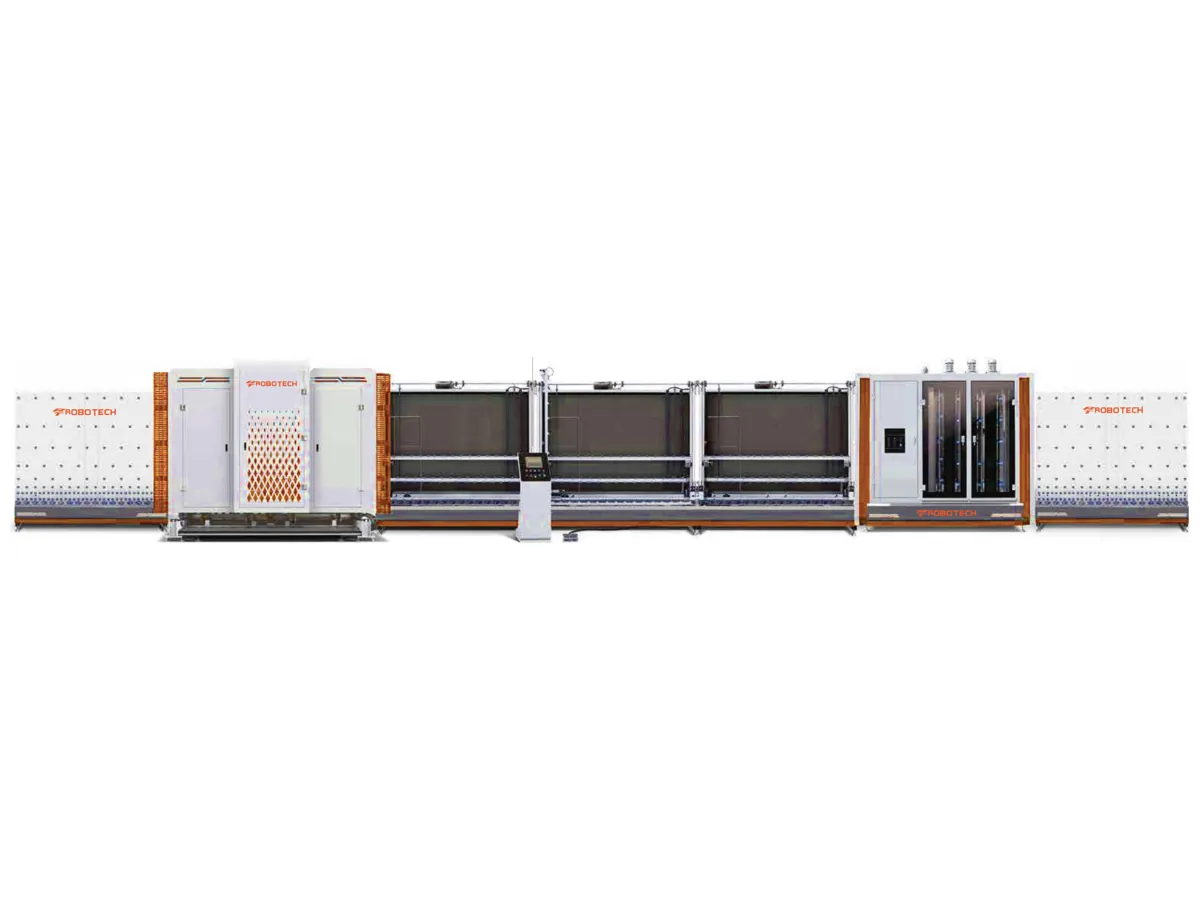
Small factories can start with separate machines: a vertical washer, a butyl extruder, an assembly table and manual or semi-automatic sealing. As demand grows, an automatic line washes, assembles, fills the gas and presses, and a sealing robot completes the seal with no gaps.
The sizes you need
Production lines come in glass sizes up to 2000×2500, 2000×3000 and 2500×3500 mm, and 3 to 18 mm thick. Choose the size for the largest window or façade panel you produce.
If you are equipping a complete window factory, read the aluminium and uPVC window factory machines guide.
Why is demand for insulating glass growing?
Air conditioning uses a large share of building electricity in the Kingdom, and windows and glass façades are among the biggest sources of heat gain. Insulating glass clearly reduces heat transfer compared with single glazing, reduces outside noise and prevents condensation on the glass. As modern projects move towards energy efficiency, insulating glass has become a basic requirement in many villas, towers and commercial buildings.
That means an opportunity for window and glass factories: instead of buying ready-made insulating glass and waiting for it, you produce it yourself in the sizes you need and on a schedule that suits your projects.
Each stage in detail
1. Cutting
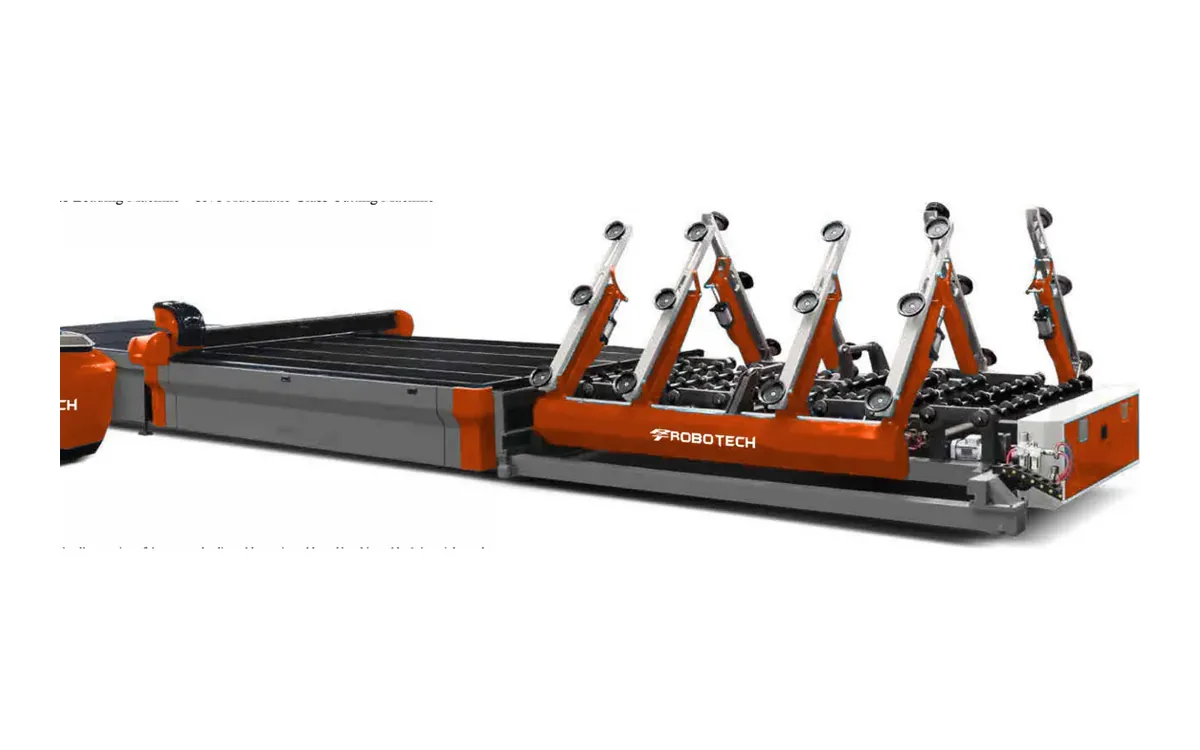
CNC glass cutting lines cut large sheets to the required sizes using software that nests the parts and reduces waste. Accurate cutting matters because the insulating unit must have exact dimensions to fit the frame.
2. Grinding and washing
Edging, beveling and washing machines smooth the glass edges and remove the coating from the edges of Low-E glass, then wash and dry it. Any dust or fingerprints inside the unit stay visible forever, so washing is a step that allows no shortcuts.
3. Spacers
The aluminium spacer is bent or assembled into a frame the same size as the glass, and filled with desiccant (molecular sieve) that absorbs any moisture inside the unit and prevents condensation for years.
4. Butyl
A layer of butyl is applied to the sides of the spacer with a butyl extruder; it is the primary seal that keeps moisture out and gas in.
5. Assembly, gas and pressing
The automatic production line assembles the two panes with the spacer, fills the cavity with argon gas and then presses the unit. Automatic lines adjust the gas fill to the unit size.
6. Sealing
The secondary seal of silicone or polysulphide around the outer perimeter gives the unit its mechanical strength. A sealing robot applies an even layer with no gaps, and the auxiliary machines include butyl extruders, sealing tables and more.
Common quality problems and their causes
| Problem | Likely cause | Fix |
|---|---|---|
| Condensation or fog inside the unit | Saturated desiccant or a leaking seal | Dry desiccant and a complete butyl and silicone seal |
| Spots or dust inside | Insufficient washing or a dusty environment | Good washing and drying and a clean assembly area |
| Gaps in the silicone | Uneven manual filling | A sealing robot or better training |
| Gas loss over time | Weak seal or under-filling | Automatic filling and seal checks |
Machines that complete a glass line
Besides insulating glass, some machines open extra work for your factory:
- [CNC drilling and sandblasting](/products/glass-cnc-drilling-sandblasting): openings for handles and fittings in door and bathroom glass, and patterns and designs by sandblasting.
- Beveling machines: bevelled edges for mirrors and decorative glass.
- Glass CNC working centres: shaping and grinding glass parts into special shapes.
A suggested starting plan
- Stage one: cutting, grinding and washing, with assembly, butyl and sealing on separate machines. Suited to a window factory that wants to cover its own orders.
- Stage two: an automatic gas filling and pressing line, raising output and stabilising quality.
- Stage three: a sealing robot and a full CNC cutting line for high volume and supplying other factories.
Send us your expected production volume and the largest glass size you need, and we will recommend the right machines for each stage.
Low-E glass and triple glazing
Low-E glass has a very thin metallic coating that reflects heat radiation while letting light through, greatly reducing solar heat entering the building. Combined with insulating glass, the result is much higher insulation, which matters a great deal in the Kingdom's climate.
- The coating faces the unit's inner cavity so it stays protected.
- The coating is removed from the edges by grinding before assembly so the butyl and silicone bond properly.
- Modern lines detect coated glass and adjust washing and assembly accordingly.
Triple glazing (three panes with two cavities) gives higher thermal and acoustic insulation, and is used in buildings that need strong insulation or are close to noise sources such as highways and airports. Some lines support producing it directly.
Space and facilities
- Space to store raw glass: large sheets need A-frame racks and room for a forklift to move.
- A straight production line: from cutting to washing and assembly, then a place for the silicone to cure.
- A clean area: for washing and assembly, preferably enclosed and air-conditioned.
- Clean water: washing machines need treated water so they do not leave spots and salts on the glass.
- Power and compressed air: according to the line's specifications.
- A curing and storage area: units need time for the silicone to cure before transport.
When does it pay to produce your own?
If you are a window factory buying insulating glass from a supplier, count how many units you buy each month, how long you wait for delivery, and how often a project has been delayed by the glass. In-house production gives you full control over schedule, quality and sizes, and opens the door to supplying other factories. Starting with separate machines reduces the initial investment, and you then expand to an automatic line as demand grows.
Summary
Producing insulating glass yourself gives you control over quality, sizes and delivery dates, and opens a growing market as buildings move towards energy saving. The secret is in the details: clean washing, dry desiccant, a complete butyl and silicone seal, an accurate gas fill and a clean assembly area. Start with separate machines and expand to an automatic line with demand.
Send us the largest glass size you need and your expected production volume, and we will prepare a machine proposal with the quote.
FAQ
Argon is heavier than air and transfers less heat, raising the glass's thermal insulation.
Written by the Robotech CNC team
A team specialised in supplying, installing and maintaining CNC and laser machines in Saudi Arabia. On the blog we share what we learn working with workshops and factories.