Aluminium and uPVC Window Factory Machines: What You Need and in What Order
Opening a window factory or upgrading your workshop? This guide arranges the machines by production line, for aluminium and uPVC.

In this article
- 1.The aluminium window production line
- 2.The uPVC window production line
- 3.The buying order by production volume
- 4.What about the glass?
- 5.Aluminium or uPVC? Choose your first line
- 6.The aluminium line machines in detail
- 7.The uPVC line machines in detail
- 8.Preparing the factory space
- 9.The quality your customer looks for
- 10.Software and cutting lists
- 11.Common mistakes when equipping a window factory
- 12.Contractor projects: the biggest opportunity
- 13.Summary
- 14.FAQ
The window and door market in the Kingdom is growing with construction, and competition is now on quality and delivery speed. A successful factory arranges its machines by production line, starting with the essentials and then expanding.
In this guide we explain the aluminium line and the uPVC line, and the machines you need at each stage from our window and door machines.
The aluminium window production line
- Cutting: a double-head saw or CNC cutting centre cuts profiles at 45° and 90°.
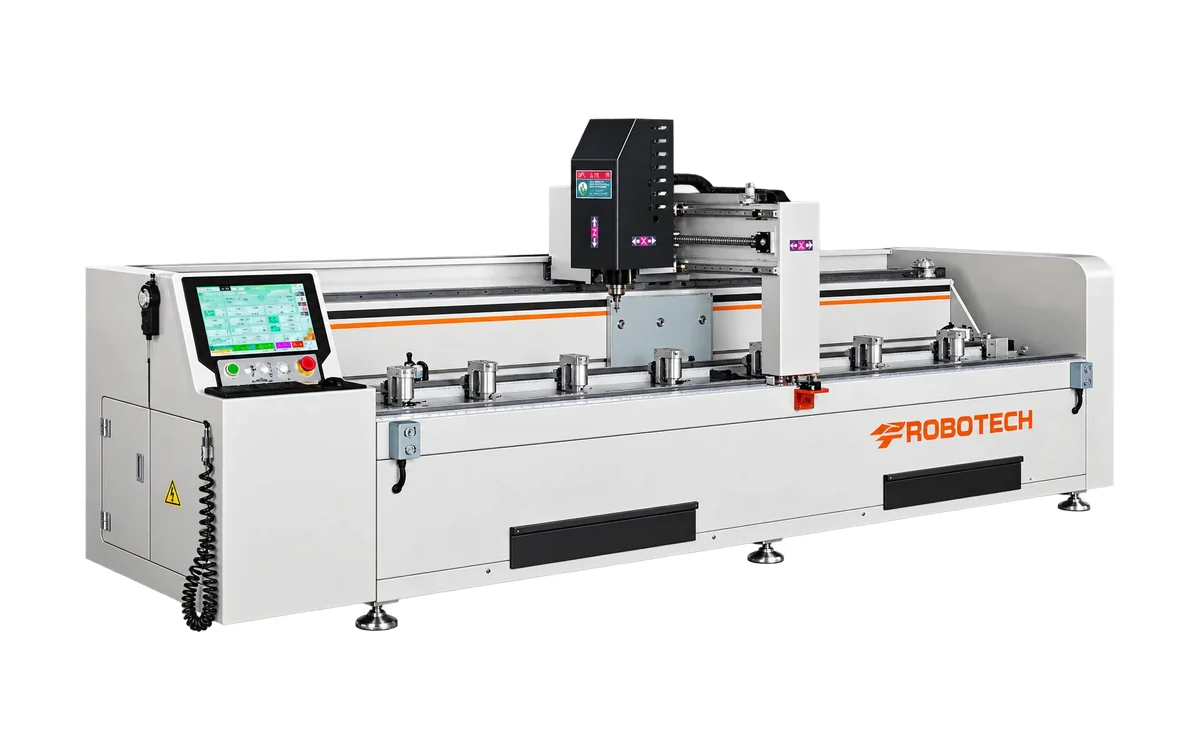
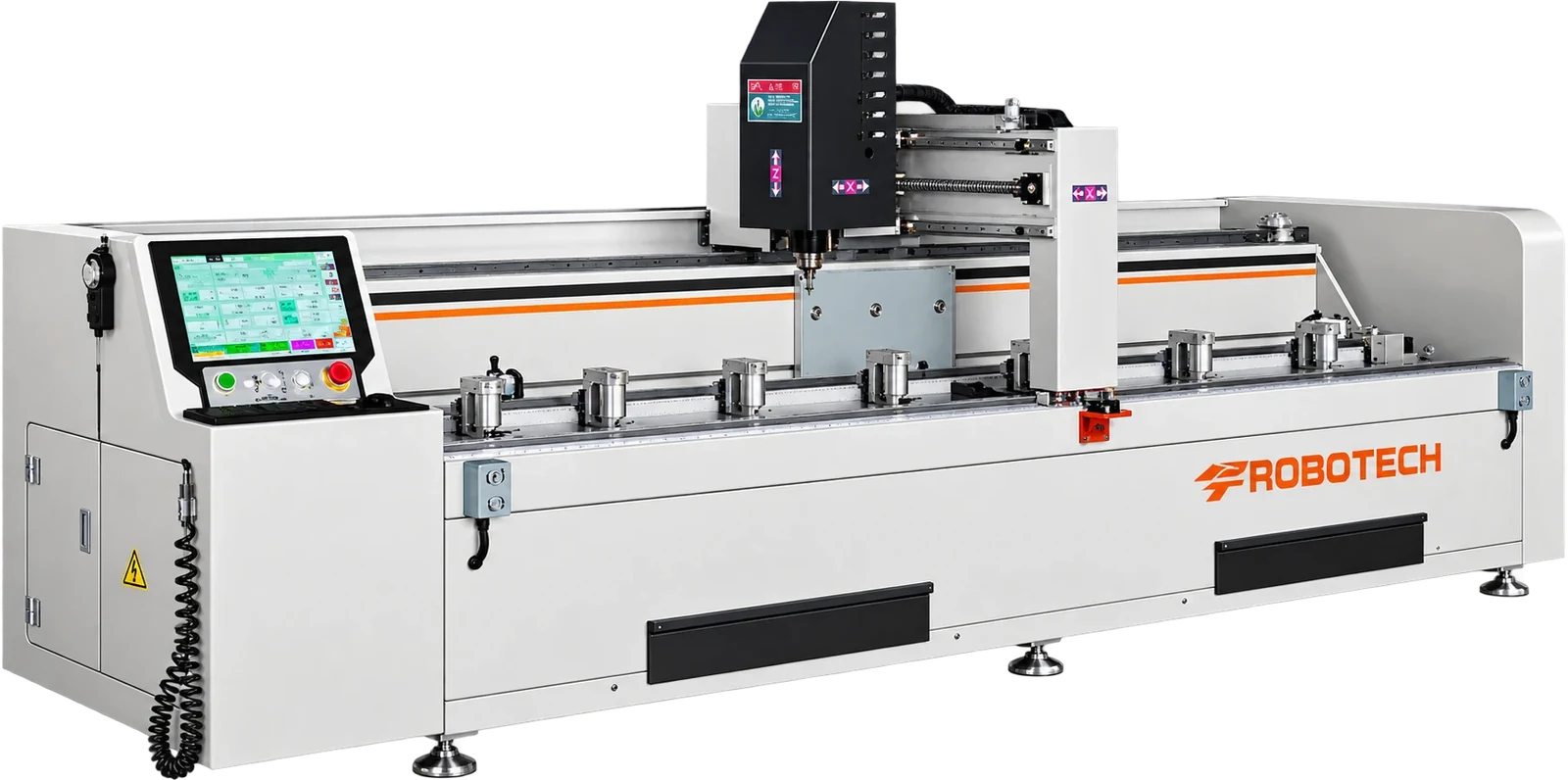
- Drilling and milling: machining centres and end milling machines for lock, handle and drainage openings and mullion ends.
- Punching: punch presses for repeat openings with dies.
- Corner assembly: corner crimping machines with one head or four.
The uPVC window production line
- Cutting: profile cutting saws for profiles, mullions and beads.
- Welding: corner welding machines with one, two or four heads, or seamless for coloured profiles.
- Weld cleaning: CNC corner cleaners that remove weld flash.
- Preparation: drainage and lock milling and steel reinforcement screw fastening.
The buying order by production volume
| Stage | Aluminium | uPVC |
|---|---|---|
| Start | Double-head saw + drilling + single-head corner crimper | Double-head saw + two-head welder + manual cleaning |
| Growth | CNC machining centre + punch presses | Four-head welder + CNC corner cleaner |
| High volume | CNC cutting centre + four-head corner crimping line | Automatic welding and cleaning line + CNC cutting centre |
What about the glass?
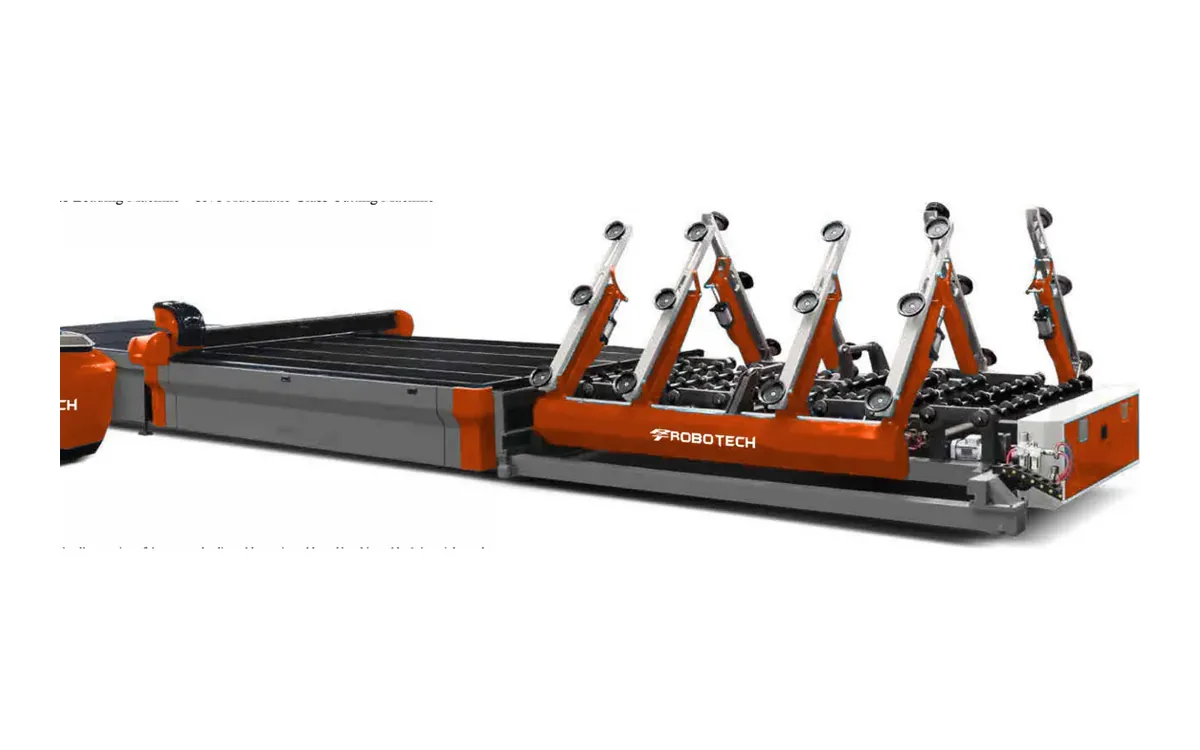
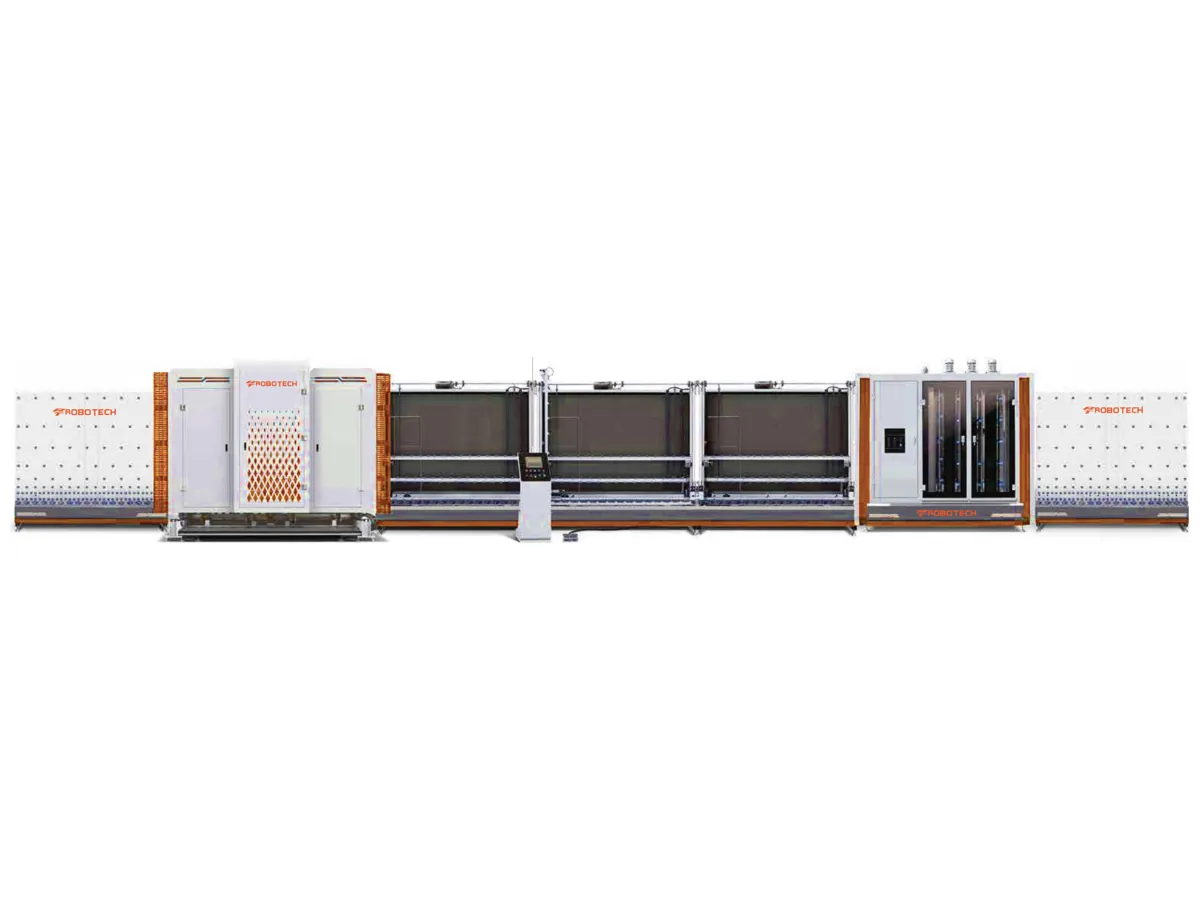
If you want to make insulating glass yourself instead of buying it, see our glass and double glazing machines and the guide to the insulating glass production line.
Aluminium or uPVC? Choose your first line
Before buying any machine, decide what you will make. Aluminium is the most common in the Kingdom for windows, façades and doors, and uPVC is spreading because of its thermal and acoustic insulation and electricity savings. Each has a different production line and different machines:
| Aluminium | uPVC | |
|---|---|---|
| Corner assembly | Mechanical crimping with corner cleats | Heat welding of the corners |
| Thermal insulation | Depends on a thermally broken profile | Excellent by nature |
| Strength and large sizes | Suited to façades and large openings | Needs internal steel reinforcement |
| Appearance | Varied paint and anodised colours | Mostly white, with colours and foils available |
| Essential machines | Saw, drilling, milling, corner crimping | Saw, welding, weld cleaning, milling |
Some factories start with one line and add the second later. A few machines are shared, such as some saws, but most machines are specific to each line.
The aluminium line machines in detail
Cutting saws
Aluminium profile saws range from a single-head saw for small workshops, to a double-head saw that cuts both ends at 45° at the same time, to CNC cutting centres that read the cutting list and cut automatically. Cutting accuracy is essential here, because any angle error leaves a gap in the window corner after crimping.
Drilling and milling
Handle, lock and drainage openings must be exactly in place. CNC machining centres make them automatically from the program and suit varied production. Punching and bending presses produce repeat openings with dies at high speed.
Corner crimping
Corner crimping machines fix the frame corners with corner cleats. A single-head machine crimps one corner at a time and suits a start; a four-head machine crimps the whole frame at once, ensuring more accurate squareness and faster production.
The uPVC line machines in detail
- Welding: corner welding machines heat both profile ends and press them together to fuse. Two- and four-head machines weld several corners at the same time and keep the frame square.
- Seamless welding: important for coloured and foiled profiles, because it leaves no visible flash line needing cleaning that would damage the colour.
- Corner cleaning: welding leaves flash on the corner, and CNC cleaners remove it quickly and uniformly.
- Preparation: milling drainage and lock openings and screwing steel reinforcement before welding.
Preparing the factory space
- Length: profiles come in lengths of about 6 metres, so the saw needs infeed and outfeed tables on both sides with enough length.
- Storage: racks for profiles sorted by type and colour, away from direct sun, especially for uPVC.
- Power and air: most machines need 380 V and an air compressor with enough capacity plus a dryer.
- Production flow: arrange the machines in order: cutting, then drilling, then assembly, then glazing and fittings, then packing.
- Glass area: a safe place to store and fit glass away from walkways.
The quality your customer looks for
The customer does not see the machines; they see the window: does it close easily? Does it keep out dust and noise? Are the corners clean with no gaps? All of this comes down to the accuracy of the machines and assembly. In the Kingdom, keeping out dust and heat is one of the main reasons a customer chooses one factory over another, so investing in accurate machines and good insulating glass pays you back in bigger orders and more projects.
Software and cutting lists
In a window factory, errors usually start with the calculations before the machines: a wrong size, a missing part or a miscalculated angle. Window design software calculates the parts, fittings and glass lists directly from the opening sizes and produces the cutting report.
- CNC cutting centres can read cutting lists and cut them in order, printing a barcode label for each part.
- The barcode links the part to its place in the window and the order number, reducing losses at assembly.
- Optimising the cutting order reduces profile offcuts and saves material.
Even if you start with manual machines, organise the cutting lists in a clear table for each order, and that alone cuts errors a lot.
Common mistakes when equipping a window factory
- Buying a cheap, inaccurate saw: every angle error shows as a gap in the corner after assembly, and cannot be fixed later.
- Ignoring the air compressor: most machines are pneumatic, and a weak compressor slows the whole line.
- Storing profiles haphazardly: scratches on painted profiles make the customer reject the window.
- No check before delivery: one window that does not close properly can lose you the whole project.
- Buying machines without training and support: machines stopped by a simple fault delay projects and lose you contractors' trust.
Contractor projects: the biggest opportunity
Individual orders for homes matter, but the biggest opportunity is contractor projects: apartment buildings, residential compounds, schools and hospitals with dozens or hundreds of windows. These projects need a factory that can deliver large quantities at consistent quality and on time, and this is where automatic machines such as CNC cutting centres, four-head crimpers and welding lines make the difference. A factory that proves it can deliver becomes the contractor's regular supplier on future projects.
And if you want to complete the service and supply the whole window with its insulating glass, read the insulating glass production line guide.
Summary
A successful window factory starts with a clear decision: aluminium, uPVC or both, then arranges the machines by production line from cutting to assembly. Start with an accurate saw and drilling and assembly machines that fit your size, organise cutting lists and storage from day one, and expand to automatic machines as you move into contractor projects. Accuracy and on-time delivery are what build a factory's reputation in the market.
Contact us on WhatsApp with your production volume and profile type, and we will recommend the right production line.
FAQ
An accurate double-head saw, because cutting accuracy decides assembly quality. After it, a drilling machine and a corner crimper.
Written by the Robotech CNC team
A team specialised in supplying, installing and maintaining CNC and laser machines in Saudi Arabia. On the blog we share what we learn working with workshops and factories.